
In Oklahoma City’s extreme climate, you’ll need to winterize your water features with de-icers and pond heaters to prevent freeze damage. At the same time, summer requires shade structures and floating plants to combat 100°F heat and evaporation. Spring calls for thorough system inspections and gradual plant reintroduction, while fall demands daily leaf removal and protective netting installation. Test water chemistry weekly during active seasons, reduce to monthly in winter, and always use dechlorinated water for refills. These foundational steps will prepare you for the extensive strategies ahead.
Key Takeaways
- Inspect and clean water features in spring, testing pumps and filters before reintroducing fish and plants.
- Install shade structures and floating plants during summer to combat Oklahoma’s intense heat and reduce evaporation.
- Remove fallen leaves daily in the fall and install pond netting to prevent debris accumulation.
- Use de-icers or pond heaters during winter freezes to maintain gas exchange for fish survival.
- Test water chemistry weekly during active months, adjusting pH levels due to Oklahoma’s alkaline soil conditions.
Spring Startup and System Reactivation After Winter Dormancy
As winter’s grip loosens and temperatures begin to rise, you’ll need to carefully reactivate your water feature’s systems to guarantee they’re ready for the active season ahead.
Start by removing debris that’s accumulated over winter months. Inspect all components for damage, including pumps, filters, and tubing. Clean filters thoroughly and replace if necessary.
Refill your feature with fresh water and reconnect electrical components. Test pumps and filtration systems before adding fish or plants back to the environment.
Check water chemistry levels and adjust accordingly. Gradually introduce aquatic life once temperatures stabilize above fifty degrees consistently.
Summer Heat Management and Evaporation Control Strategies
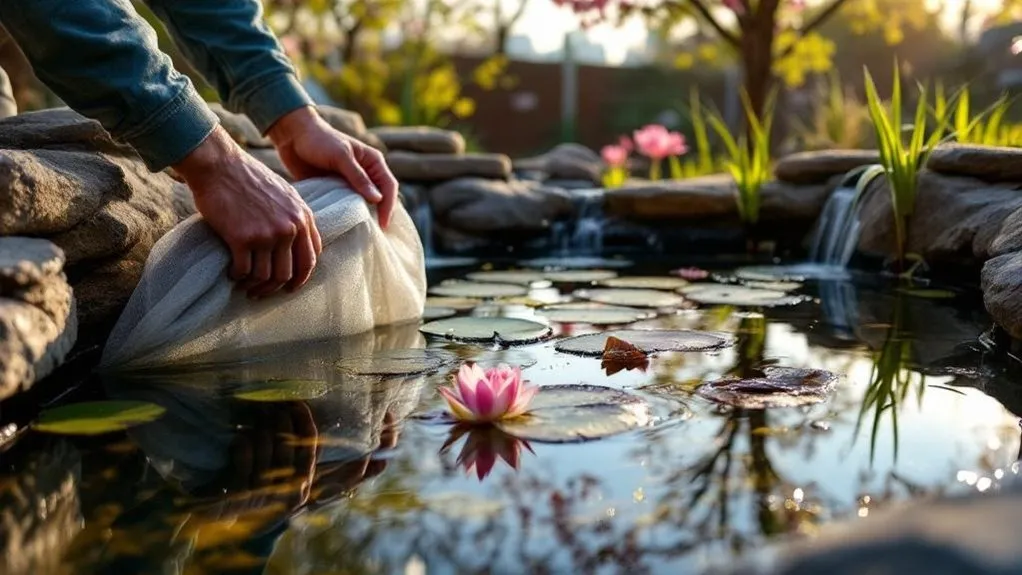
When summer temperatures soar, your water feature faces its greatest challenge: excessive evaporation and overheating that can stress aquatic life and strain your maintenance budget.
Install shade structures like pergolas or umbrellas over portions of your pond to reduce direct sunlight exposure. Add floating plants such as water lilies that naturally cool the water while blocking evaporation.
Consider installing a misting system or fountain to increase surface agitation, which promotes cooling through air circulation. Monitor water levels daily and top off with dechlorinated water.
Position your feature away from heat-reflecting surfaces like concrete patios or south-facing walls.
Fall Preparation and Debris Management Techniques
Fall brings a different set of challenges that require proactive management to keep your water feature healthy through the season. You’ll need to address leaf accumulation and temperature fluctuations that affect water chemistry.
| Task | Frequency | Priority |
|---|---|---|
| Remove fallen leaves | Daily during peak fall | High |
| Clean skimmer baskets | Weekly | Medium |
| Test water chemistry | Bi-weekly | High |
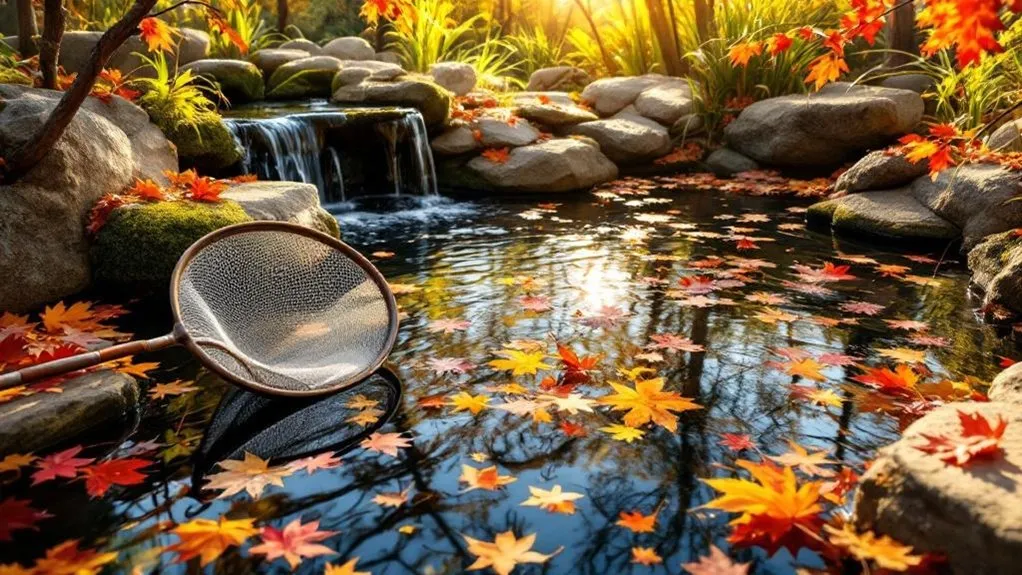
Install netting over your pond to catch debris before it sinks. Trim overhanging branches to minimize leaf drop. Reduce feeding schedules as fish metabolism slows in cooler temperatures. You should also begin shifting plants and preparing equipment for Oklahoma’s upcoming winter months.
Winter Protection and Freeze Prevention Methods
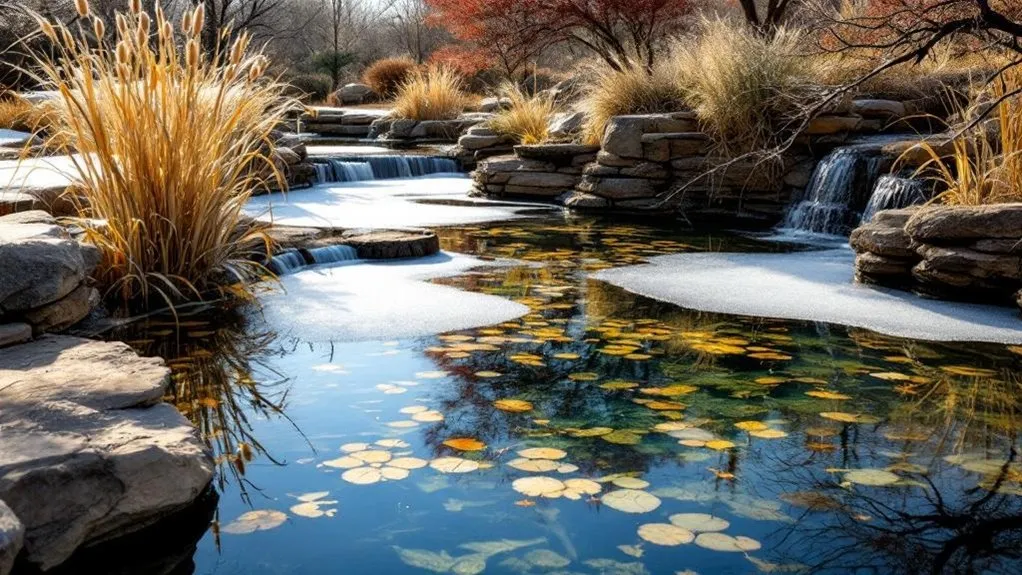
While Oklahoma’s winters can bring sudden temperature drops and ice formation, proper preparation will protect your water feature from costly freeze damage.
Install a de-icer or pond heater to maintain a small opening in the ice, allowing harmful gases to escape. You’ll want to keep pumps running during mild freezes to prevent water from stagnating.
For severe cold snaps, disconnect and store pumps indoors to prevent cracking. Add a bubbler or aerator to create water movement, which resists freezing.
Cover smaller features with insulated blankets, and never break ice with tools—the shock waves can harm fish and damage equipment.
Oklahoma-Specific Plant Selection for Year-Round Water Gardens
Although Oklahoma’s climate presents unique challenges with its extreme temperature swings and unpredictable weather patterns, you can create a thriving year-round water garden by selecting native and adapted aquatic plants that handle the state’s harsh summers and variable winters.
| Plant Type | Recommended Species | Growing Season |
|---|---|---|
| Marginal | Arrowhead, Cattails | Spring-Fall |
| Floating | Water Hyacinth, Water Lettuce | Summer |
| Submerged | Hornwort, Cabomba | Year-Round |
| Bog | Cardinal Flower, Blue Flag Iris | Spring-Summer |
Choose hardy perennials like cattails and arrowhead that’ll return each spring. You’ll need to treat floating plants as annuals since they won’t survive Oklahoma’s freezing temperatures.
Seasonal Water Quality Testing and Chemical Balance Adjustments
Because Oklahoma’s dramatic seasonal shifts directly impact your water feature’s chemistry, you’ll need to adjust your testing schedule and chemical balance strategies throughout the year.
Test pH, ammonia, and nitrite levels weekly during spring and summer when temperatures fluctuate rapidly. In fall, reduce testing to bi-weekly as activity slows. Winter requires monthly monitoring unless you’re maintaining circulation.
Oklahoma’s alkaline soil raises pH levels, so you’ll often need pH reducers during active months.
Add beneficial bacteria monthly in warm weather to maintain nitrogen cycles. During temperature swings above 50°F, increase aeration to prevent oxygen depletion that stresses fish and plants.
Equipment Maintenance Schedules for Pumps, Filters, and UV Sterilizers
Since Oklahoma’s extreme weather patterns place extra stress on water feature equipment, you’ll need to follow strict maintenance schedules to prevent costly breakdowns and guarantee peak performance.
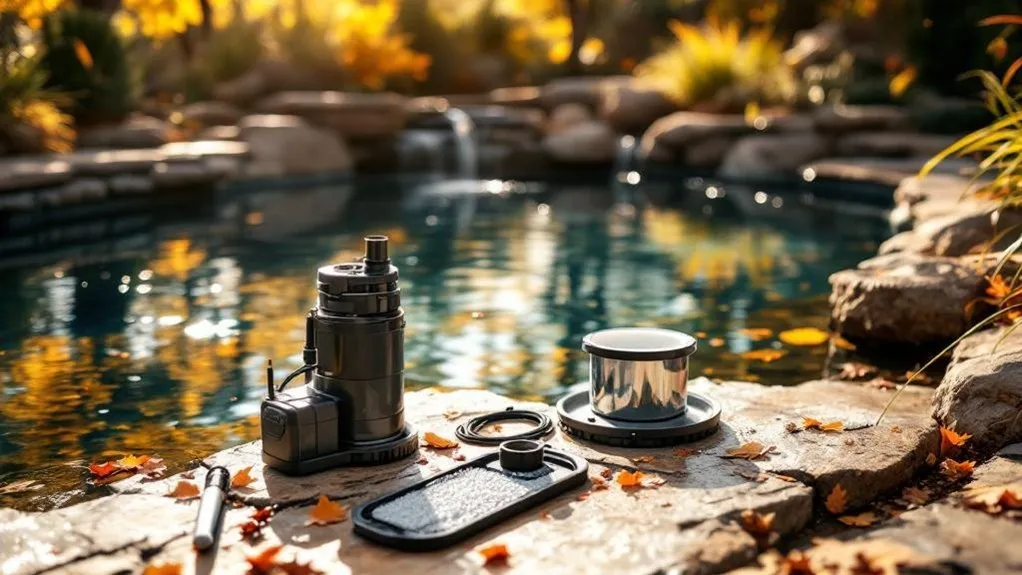
Clean pump impellers monthly during operating season, checking for debris and wear. Replace filter media every 4-6 weeks, or when flow rates decrease noticeably.
Inspect UV sterilizer bulbs quarterly—they lose effectiveness after 8,000-10,000 hours of use. Before winter, drain pumps completely and store indoors to prevent freeze damage.
During spring startup, lubricate moving parts and test all electrical connections. Summer heat requires weekly equipment inspections to catch problems early.
Managing Fish Health Through Oklahoma’s Temperature Extremes
When Oklahoma’s temperatures swing from scorching 100°F summers to freezing winters, your fish face life-threatening stress that requires proactive management.
Install pond heaters before temperatures drop below 50°F to maintain metabolic function. During summer heat waves, add shade structures and increase aeration to boost oxygen levels.
Stop feeding fish when water temperatures fall below 50°F, as they can’t digest food properly. Monitor for signs of stress like gasping at the surface or lethargic behavior.
Create deeper areas (3+ feet) where fish can retreat during extreme temperatures. Consider relocating sensitive species indoors during harsh winter months.
Storm Damage Prevention and Recovery for Severe Weather Events
Beyond protecting fish from temperature extremes, Oklahoma’s notorious severe weather presents another major threat to your water feature’s survival.
Preparation and swift recovery actions will minimize costly damage from tornadoes, hail, and damaging winds.
Pre-storm preparations:
- Secure loose decorative elements and remove fragile accessories
- Lower water levels to prevent overflow during heavy rainfall
- Install protective netting over pond surfaces to catch debris
- Document your setup with photos for insurance claims
After storms pass, immediately remove fallen debris, check equipment for damage, and test electrical systems before restarting pumps.
Quick action prevents secondary problems like water contamination.
Energy-Efficient Solutions for Year-Round Water Feature Operation
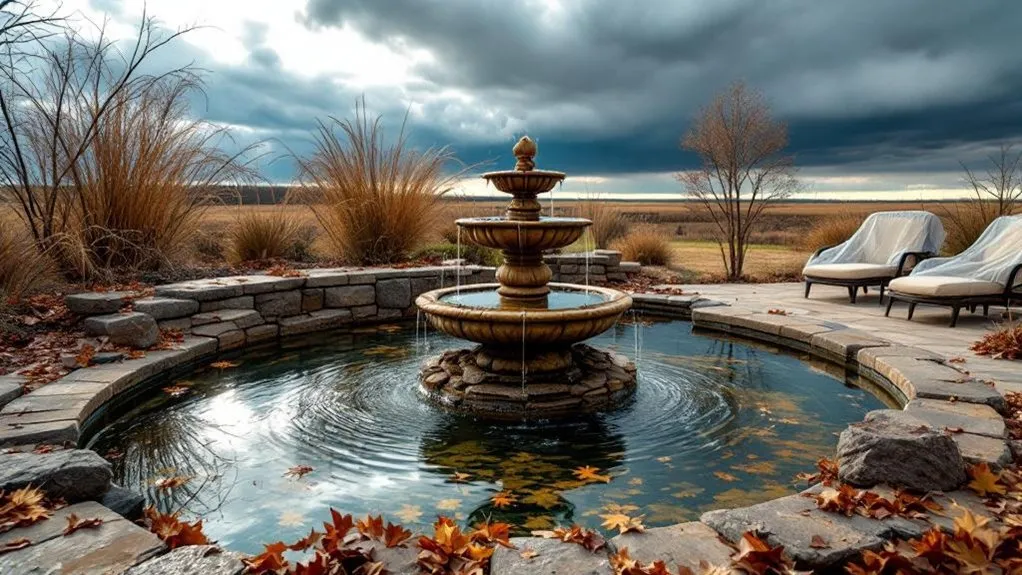
While protecting your water feature from Oklahoma’s harsh weather conditions remains essential, managing the ongoing energy costs of year-round operation can greatly impact your budget.
You’ll want to invest in variable-speed pumps that automatically adjust flow rates based on seasonal needs.
Installing LED lighting systems reduces electricity consumption by up to 80% compared to traditional options.
Consider adding timers to control operating hours during peak energy rate periods.
Solar-powered pumps and aerators offer excellent alternatives for smaller features.
Upgrading to energy-efficient heaters with programmable thermostats helps maintain ideal water temperatures without excessive power usage throughout Oklahoma’s fluctuating seasonal conditions.
Frequently Asked Questions
What Permits Are Required for Installing Water Features in Oklahoma City?
You’ll need to check with Oklahoma City’s Development Services Department for specific permit requirements.
Generally, you’ll require a building permit for permanent installations, especially those involving electrical work or plumbing connections.
If you’re installing near property lines, you might need setback approvals.
For larger features affecting drainage, you could need site development permits.
Don’t forget to call 811 before digging to mark underground utilities and avoid costly damage.
How Much Does Professional Seasonal Maintenance Cost in the Metro Area?
You’ll typically pay $150-400 per seasonal maintenance visit for professional water feature care in the Oklahoma City metro.
Small fountains cost less, while large ponds with filtration systems run higher. Most companies offer spring startup packages ($200-300) and winterization services ($150-250).
You can expect to pay $300-800 annually for complete seasonal care, depending on your feature’s size and complexity.
Shop around—prices vary considerably between local contractors.
Which Local Suppliers Offer the Best Prices on Water Feature Equipment?
You’ll find competitive prices at several local suppliers. Lowe’s and Home Depot offer standard equipment with frequent sales.
For specialized items, check out local pool supply stores like Leslie’s Pool Supplies or independent retailers like OKC Water Gardens.
Don’t overlook wholesale distributors if you’re making larger purchases. Compare prices online first, then negotiate with local stores.
Many suppliers offer price matching, so you can leverage competitive quotes to secure better deals.
Are There HOA Restrictions on Water Features in Oklahoma City Neighborhoods?
You’ll find that HOA restrictions on water features vary considerably across Oklahoma City neighborhoods.
Most HOAs require written approval before installation, with guidelines covering size, placement, and noise levels. Some communities prohibit pools or large fountains entirely, while others allow decorative features with restrictions.
You should review your specific HOA covenants and submit detailed plans before purchasing equipment.
Contact your HOA board directly to understand your neighborhood’s particular rules and approval process.
What Insurance Considerations Apply to Backyard Ponds and Water Features?
You’ll need to review your homeowner’s insurance policy since water features can affect coverage and premiums.
Contact your insurer to discuss liability concerns if someone’s injured near your pond. You might need additional coverage for expensive equipment like pumps and filtration systems.
Some policies exclude water damage from features, so you’ll want specific riders.
Consider increasing liability limits since attractive nuisances like ponds can draw neighborhood children onto your property.