
Your sloped yard is costing you thousands in potential damage from uncontrolled soil erosion, which creates dangerous gullies and threatens your home’s foundation with repairs ranging from $10,000 to $25,000. Beyond the financial risk, unstable slopes pose serious safety hazards for your family, creating slip risks and undermining walkways. Retaining walls transform these problems into solutions, converting unusable slopes into valuable outdoor living spaces while increasing your property value by 15-25% and preventing costly future repairs.
Key Takeaways
- Retaining walls prevent dangerous soil erosion that creates gullies, exposes tree roots, and threatens the structural integrity of homes.
- Poor drainage on slopes causes water accumulation, leading to foundation damage that can cost between $10,000 and $25,000, as well as additional expenses for basement flooding.
- Unstable slopes pose serious safety hazards, including fall risks for children, compromised walkways, and slippery conditions during storms.
- Erosion problems reduce property values, as buyers tend to avoid homes with visible slope instability and structural concerns.
- Retaining walls convert unusable sloped areas into functional outdoor spaces while increasing home value by 15-25%.
The Hidden Dangers of Uncontrolled Soil Erosion
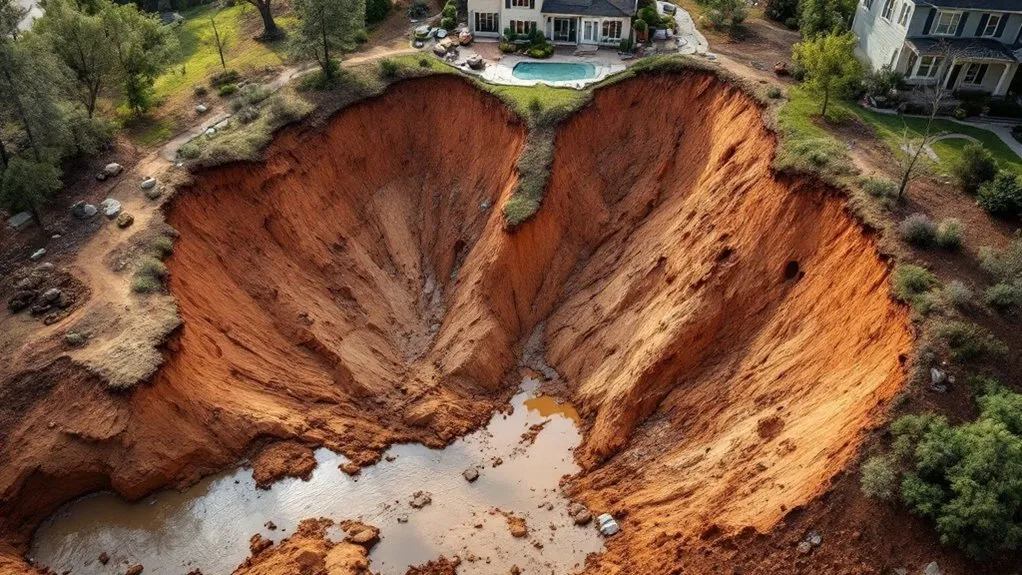
When rain pounds your sloped yard season after season, you’re witnessing more than just water runoff—you’re watching your property’s foundation slowly disappear.
Each storm strips away precious topsoil, creating dangerous gullies and exposing tree roots. Your landscaping investments wash away, leaving barren patches and unstable ground in their wake.
Without intervention, this erosion poses a threat to your home’s structural integrity, as soil shifts beneath foundations, driveways, and walkways. You’ll face costly repairs when utilities become exposed or basement walls crack from shifting earth.
What starts as minor surface erosion quickly escalates into significant property damage that’s expensive to reverse.
How Gravity Creates Costly Drainage Problems
Beyond surface erosion, gravity constantly pulls water downhill across your sloped property, creating a cascade of drainage issues that compound over time. Water accumulates at the lowest points on your property, saturating the soil and creating hydrostatic pressure against the foundations. This pressure can cause cracks in basement walls and shift structural elements.
| Problem | Cost Impact |
|---|---|
| Foundation damage | $10,000-$25,000 |
| Basement flooding | $3,000-$8,000 |
| Landscape replacement | $2,000-$6,000 |
| Drainage system repair | $1,500-$4,000 |
Without proper water management, you’ll face repeated flooding, soggy lawns, and expensive foundation repairs. These drainage problems worsen during heavy rains when gravity accelerates water movement down your slope.
Safety Hazards That Put Your Family at Risk
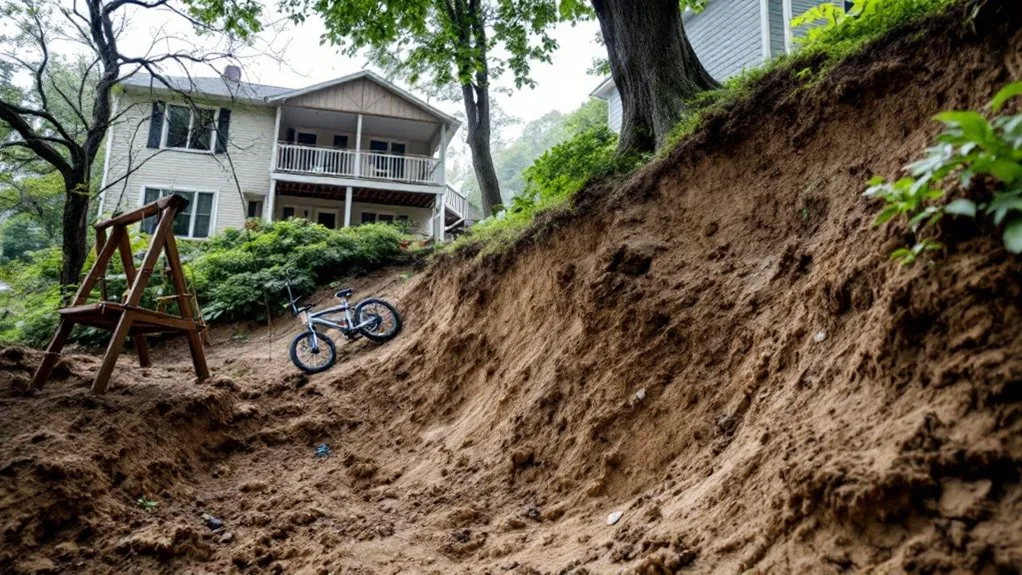
Unstable slopes pose a daily threat to your family’s safety, creating hazardous conditions that can lead to serious injuries or even worse.
You’re facing constant risks of soil erosion that can undermine walkways, patios, and outdoor structures. Loose rocks and debris can tumble down during storms, striking anyone in their path.
Children playing on unstable terrain risk serious falls when the ground gives way beneath them. Your property’s shifting soil creates uneven surfaces that become slip hazards, especially when the ground is wet.
Without proper slope stabilization, you’re gambling with your loved ones’ well-being every time they step into your yard.
Protecting Your Property’s Foundation and Value
While safety concerns demand immediate attention, your property’s structural integrity and market value are equally threatened by uncontrolled slope erosion.
Water runoff can compromise your home’s foundation, leading to costly structural damage that’s expensive to repair. Soil erosion gradually weakens the ground supporting your property, potentially leading to foundation settling or cracking.
Beyond structural risks, unstable slopes can significantly impact the marketability of your property. Prospective buyers often avoid homes with obvious erosion problems, viewing them as maintenance nightmares.
You’ll face reduced property values and longer selling times. Installing retaining walls demonstrates proactive property management, protecting your investment while enhancing curb appeal and buyer confidence.
Creating Usable Space From Unusable Slopes
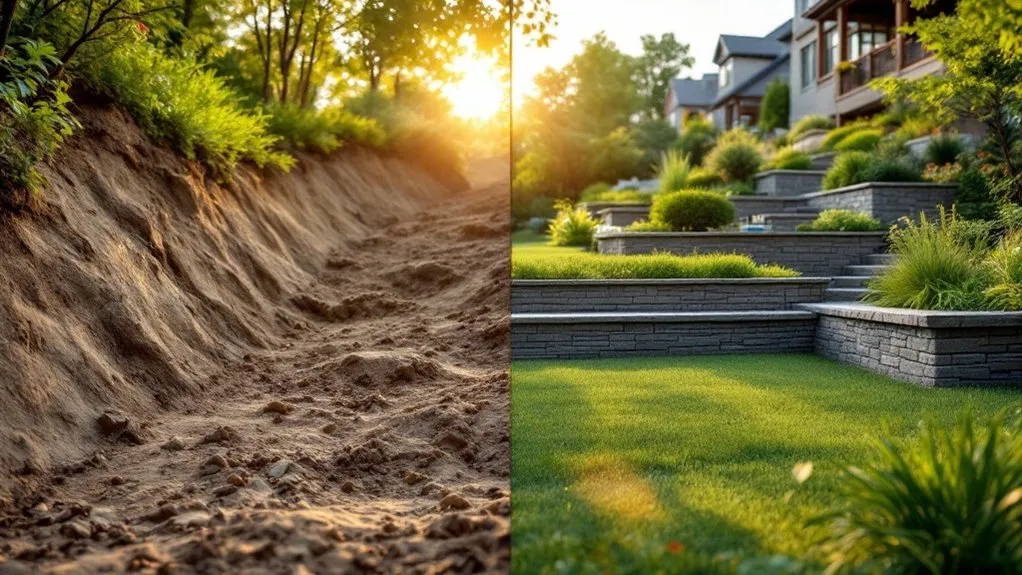
Retaining walls transform steep, unusable slopes into valuable outdoor living areas that expand your home’s functional footprint.
You’ll reclaim previously wasted yard space and create level terraces perfect for various activities.
These functional areas include:
- Patio spaces – Install outdoor furniture, grills, and entertainment zones
- Garden beds – Plant flowers, vegetables, or decorative landscaping
- Play areas – Create safe, flat surfaces for children’s activities
- Storage solutions – Build sheds, workshops, or equipment storage
You’re fundamentally adding square footage to your property without constructing additional buildings.
Each terraced level becomes a distinct outdoor room, maximizing your yard’s potential and increasing your home’s overall usability.
Types of Retaining Walls for Different Needs
When selecting the right retaining wall for your project, consider several key factors, including wall height, soil conditions, drainage requirements, and aesthetic preferences.
Concrete block walls offer durability and versatility for medium-height applications. Natural stone provides timeless beauty but requires skilled installation. Poured concrete delivers maximum strength for tall walls and heavy loads.
Timber walls work well for shorter applications and blend naturally with landscapes. Gabion walls use wire cages filled with rocks, creating excellent drainage while maintaining cost-effectiveness.
Each material has specific height limitations, maintenance requirements, and installation complexities that’ll influence your decision.
Long-Term Benefits That Justify the Investment
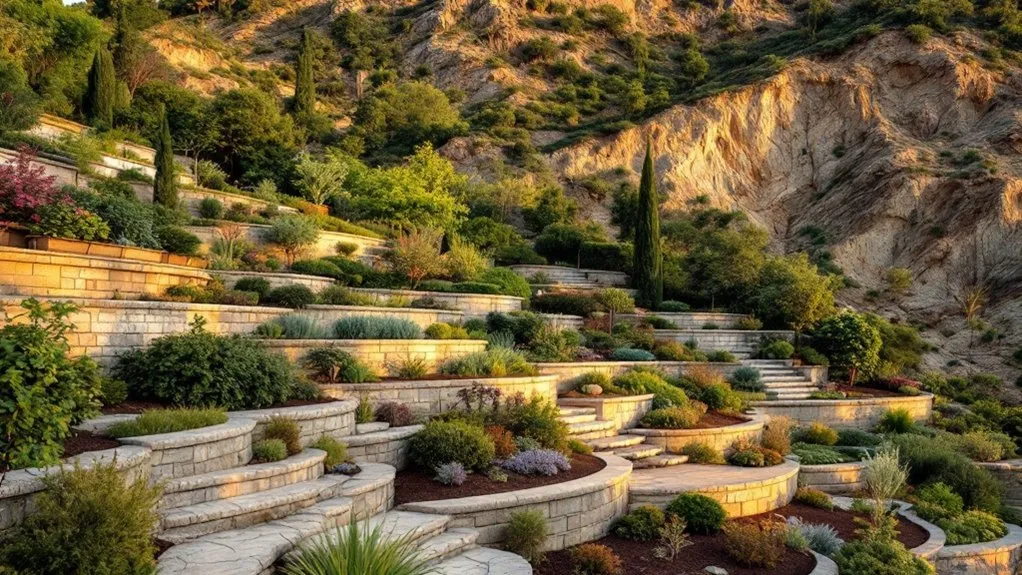
Beyond the initial material and installation costs, a well-built retaining wall delivers substantial returns that extend far beyond its construction timeline.
You’ll discover these investments pay dividends through multiple channels:
- Property Value Enhancement – Quality retaining walls can increase a home’s value by 15-25%, making them more attractive to future buyers.
- Erosion Prevention Savings – Avoiding costly soil replacement, foundation repairs, and landscape restoration over decades.
- Usable Space Creation – Converting unusable slopes into functional areas for gardens, patios, or recreational spaces.
- Reduced Maintenance Costs – Eliminating ongoing erosion control measures and repeated landscape repairs.
These benefits compound annually, making retaining walls smart long-term investments.
Frequently Asked Questions
Do I Need a Permit to Build a Retaining Wall on My Property?
You’ll likely need a permit for your retaining wall, but requirements vary by location and wall height.
Most municipalities require permits for walls that are over 3-4 feet tall or those that affect drainage patterns.
Check with your local building department first, as some areas also have setback requirements from property lines.
Don’t skip this step – unpermitted walls can create legal issues when you’re selling your home and may not meet safety standards.
How Much Does It Typically Cost to Install a Retaining Wall?
You’ll typically spend between $15 and $50 per square foot for retaining wall installation, depending on the materials and the complexity of the project.
Bare concrete block walls are less expensive, while natural stone or engineered systems are more expensive. Labor accounts for 50-70% of total costs.
You’re looking at $3,000 to $ 15,000 for most residential projects.
Factors affecting price include wall height, soil conditions, drainage requirements, and site accessibility.
Always obtain multiple quotes, as prices can vary significantly between contractors and regions.
Can I Build a Retaining Wall on My Own, or Do I Need a Professional?
You can build smaller retaining walls yourself if you’re handy with tools and understand the principles of proper drainage techniques.
DIY projects work best for walls under 3-4 feet tall using materials like timber or small blocks.
However, you’ll need professionals for taller walls, complex drainage issues, or if local codes require engineering approval.
Don’t underestimate the physical demands and technical knowledge required.
If you’re unsure about soil conditions or structural requirements, hire professionals to avoid costly mistakes.
How Long Does Retaining Wall Construction Usually Take to Complete?
You’ll typically need 3-7 days for most residential retaining wall projects.
Simple gravity walls under 3 feet can be completed in a weekend, while taller engineered walls requiring permits and drainage systems take longer.
Weather affects your timeline considerably – you can’t pour concrete in freezing temperatures or work with wet soil.
If you’re hiring professionals, they’ll complete the installation more quickly than a DIY project.
Complex projects with extensive excavation or challenging access can extend construction to 2-3 weeks.
What Maintenance Is Required to Keep My Retaining Wall in Good Condition?
You’ll need to inspect your retaining wall regularly for cracks, bulging, or drainage issues.
Clean debris from weep holes and drainage systems to prevent water buildup.
Remove vegetation growing between stones or blocks, as roots can cause structural damage.
Check that backfill hasn’t settled, creating gaps behind the wall.
Address minor repairs promptly before they escalate into major problems.
Most retaining walls require minimal upkeep when you stay proactive with these simple maintenance tasks.