
Retaining walls prevent erosion and flooding by creating barriers that hold back soil and redirect water flow. They interrupt water’s natural downhill path, reducing velocity and erosive force. Key elements like weep holes, French drains, and graded backfill work together to manage water effectively. Based on your specific landscape needs, choose from various types—gravity, cantilever, gabion, sheet pile, or anchored—proper design and regular maintenance guarantee that these structures provide lasting protection for your property.
Key Takeaways
- Retaining walls physically block soil movement, preventing slope erosion during heavy rainfall.
- Weep holes and French drains manage water pressure behind walls, reducing the risk of flooding.
- By interrupting water’s natural downhill path, retaining walls decrease velocity and erosive force.
- Well-designed walls include graded backfill and drainage pipes to redirect water safely away from structures.
- Gabion designs allow controlled water flow while effectively containing soil and preventing washouts.
Understanding How Retaining Walls Combat Soil Erosion
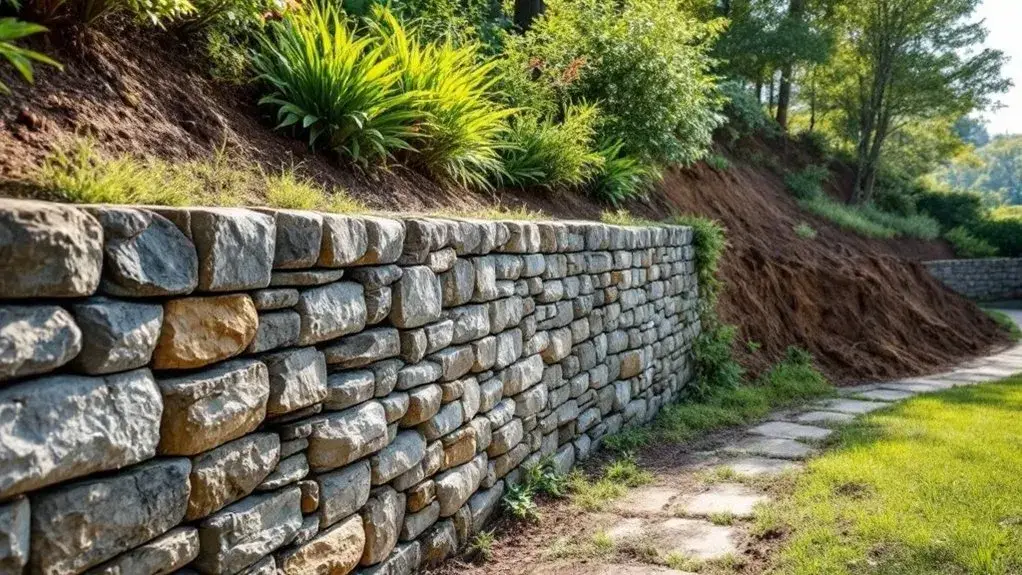
While many homeowners view retaining walls primarily as decorative landscape features, they serve a critical engineering purpose in preventing soil erosion.
They work by physically blocking soil movement and redistributing the pressure the sloped terrain exerts.
When you install a retaining wall, you create a barrier that holds back soil that would otherwise wash away during rainfall.
The wall’s structure interrupts water’s natural downhill path, reducing its velocity and erosive force.
Also, proper drainage systems behind the wall safely channel excess water away, preventing hydrostatic pressure that can destabilize the soil and the wall itself.
Key Design Elements for Effective Water Management
Because water represents the primary threat to any retaining wall system, effective design must prioritize proper drainage mechanisms. You’ll need to implement specific features to manage water flow and pressure.
| Design Element | Purpose | Implementation |
|---|---|---|
| Weep Holes | Release trapped water | Every 4-6 feet along base |
| French Drains | Redirect groundwater | Behind wall, gravel-filled |
| Graded Backfill | Prevent water pooling | 1% slope away from wall |
| Geotextile Filter | Block soil, allow water | Between backfill layers |
| Drainage Pipe | Collect and channel water | Perforated pipe at base |
These elements work together to prevent hydrostatic pressure buildup that could compromise your wall’s structural integrity.
Types of Retaining Walls and Their Erosion Control Benefits
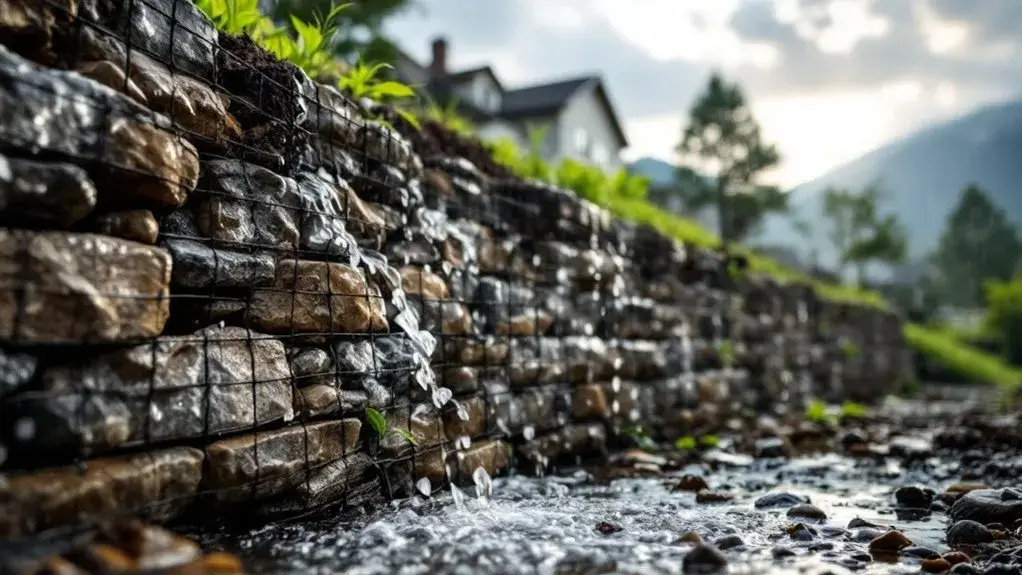
Adequately designed water management systems will help you select the most appropriate retaining wall type for erosion challenges.
Gravity walls rely on their mass to resist pressure, ideal for more miniature landscapes.
Cantilever walls use reinforced concrete with a leveraged design, which is perfect for taller applications.
Gabion walls consist of stone-filled wire baskets that allow water drainage while preventing soil movement.
Sheet pile walls work well in soft soils and tight spaces.
Anchored walls include additional support through cables or rods for steep slopes.
Reinforced soil walls incorporate geotextile layers, offering strength and excellent drainage capabilities.
Landscape Integration: Beyond Functional Protection
Although retaining walls serve a critical erosion control function, they should complement your landscape design rather than detract from it.
You’ll find numerous materials that blend aesthetics with practicality—natural stone creates a rustic feel, while concrete blocks offer clean, modern lines.
Consider incorporating terraced gardens or cascading plants that soften the wall’s appearance while providing additional erosion control. Native plants with deep root systems work exceptionally well here.
You can also use varying heights and curved designs to create visual interest. When properly integrated, your retaining wall becomes a protective barrier and a distinctive landscape feature.
Maintenance Practices to Ensure Long-Term Flood Prevention
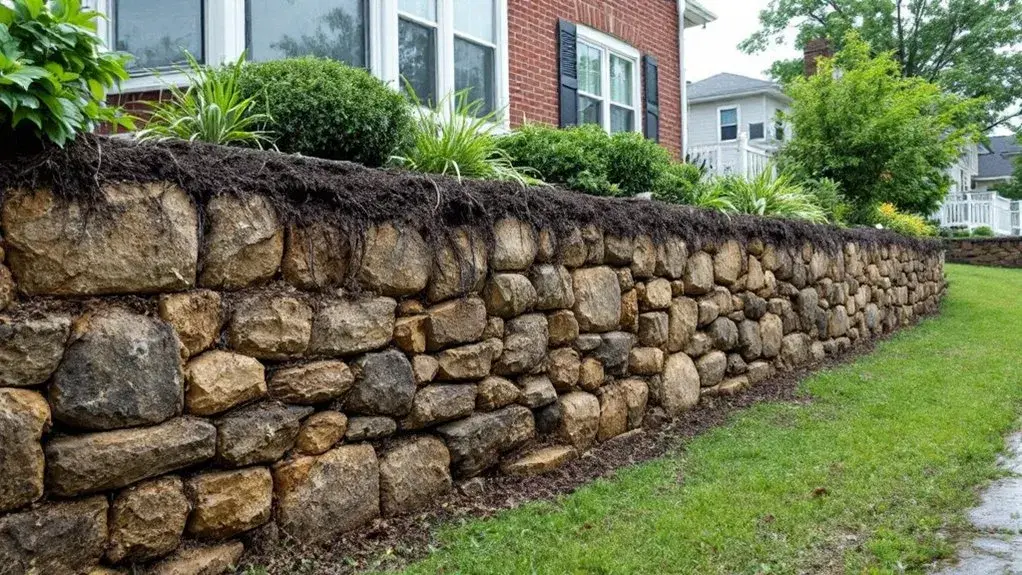
Even the most well-constructed retaining walls require regular maintenance to remain effective against flooding.
You’ll need to perform several key tasks to guarantee your wall protects your property for years.
- Inspect drainage systems quarterly, clearing any debris from weep holes and checking that water flows freely away from the wall.
- Examine the wall face for cracks, bulges, or leaning at least twice yearly.
- Remove invasive vegetation that could damage the structure’s integrity.
- Reapply waterproof sealants every 2-3 years, especially in harsh weather conditions.
Frequently Asked Questions
What Permits Are Required Before Installing a Retaining Wall?
Before installing a retaining wall, you’ll typically need a building permit from your local building department.
You may also require zoning permits, especially if your wall exceeds certain height limits (usually 3-4 feet).
If your property is in a historic district, you’ll need approval from the historic commission.
Environmental permits from state agencies might be necessary for walls near waterways or wetlands.
Don’t forget to check for utility clearances, too.
How Much Does a Professional Retaining Wall Installation Typically Cost?
Professional retaining wall installation costs typically range from $30 to $150 per square foot.
You’ll pay more for taller walls, premium materials, complex designs, or difficult site conditions.
A small DIY wall might cost $1,500, while professional installations often run $5,000-$10,000 for average residential projects.
Large or engineered walls can exceed $20,000.
Always get multiple quotes from licensed contractors in your area for accurate pricing.
Can I Build a DIY Retaining Wall for Small Slopes?
Yes, you can build a DIY retaining wall for small slopes! For slopes under 3 feet high, it’s a manageable weekend project.
You must choose appropriate materials like interlocking blocks, timber, or natural stone.
Don’t skip proper drainage behind the wall and a solid foundation.
Check local building codes first, as permits might be required even for smaller projects.
With proper planning and basic tools, you’ll save significant money.
Do Retaining Walls Affect Property Insurance Rates in Flood Zones?
Yes, retaining walls can affect your property insurance rates in flood zones.
They’re often considered flood mitigation structures, and if adequately engineered and documented, they may qualify you for reduced premiums.
Insurance companies recognize that well-constructed retaining walls can decrease flooding risk by controlling water flow and stabilizing soil.
To benefit from potential rate reductions, you must have the wall professionally certified and submit documentation during your insurance assessment.
How Do Retaining Walls Perform During Earthquakes or Ground Movement?
Depending on their design, retaining walls can perform well or fail during earthquakes.
Properly engineered walls with flexible structures, good drainage, and reinforcement typically withstand ground movement better. They’re designed to absorb seismic energy rather than resist it rigidly.
However, poorly constructed walls or those without seismic considerations are prone to cracking, tilting, or complete collapse when subjected to lateral forces during earthquakes.