
You can transform your property’s curb appeal with retaining walls that blend function and style. Consider natural stone options, such as fieldstone or granite, for timeless elegance, or opt for modern geometric concrete designs with LED lighting strips. Terraced garden walls transform challenging slopes into dramatic multilevel displays, while mixed materials, such as stone-and-steel combinations, create a distinctive character. Curved serpentine walls flow naturally with your landscape’s contours. These creative approaches will reveal numerous possibilities for enhancing the visual impact of your outdoor space.
Key Takeaways
- Natural stone walls, crafted from fieldstone, limestone, or granite, offer timeless elegance while enhancing property value and complementing existing vegetation.
- Modern geometric designs, featuring concrete blocks and steel panels, create bold visual contrast and seamless indoor-outdoor transitions.
- Terraced garden walls transform sloping landscapes into dramatic multilevel displays that showcase plants at varying heights.
- Mixed material combinations, such as stone with steel or concrete with wood, create a distinctive character through strategic visual contrast.
- Curved and serpentine walls harmonize with the landscape contours, creating dynamic focal points and enhancing visual interest.
Natural Stone Walls That Blend Beauty With Function
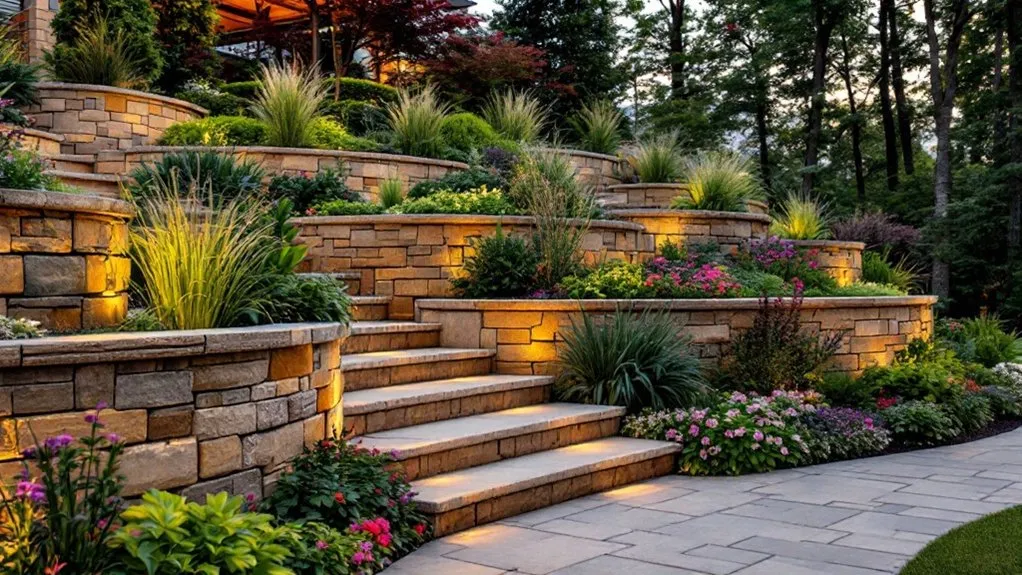
When you’re searching for a retaining wall solution that doesn’t compromise your landscape’s aesthetic appeal, natural stone walls deliver unmatched versatility and timeless elegance.
You’ll find that fieldstone, limestone, and granite create stunning barriers that appear naturally integrated into your terrain. These materials weather beautifully, developing character over decades while maintaining structural integrity.
You can choose dry-stacked construction for rustic charm or mortared joints for formal sophistication.
Natural stone’s irregular textures and earth-toned colors complement existing vegetation seamlessly. You’ll appreciate how these walls increase property value while providing excellent drainage and frost resistance, making them both beautiful and exceptionally durable investments.
Modern Geometric Designs for Contemporary Landscapes
While traditional stone walls offer rustic appeal, contemporary retaining walls embrace bold geometric patterns and sleek materials that transform your outdoor space into a modern architectural statement.
You’ll find rectangular concrete blocks, steel panels, and precast elements that create clean lines, complementing minimalist architecture.
Stack modular units in staggered patterns or alternate materials, such as wood and metal, for visual contrast.
Consider incorporating LED lighting strips between courses or behind translucent panels to highlight geometric forms after dark.
These designs work exceptionally well with contemporary homes, creating seamless shifts between indoor and outdoor living spaces while maintaining essential structural function.
Terraced Garden Walls That Create Visual Drama
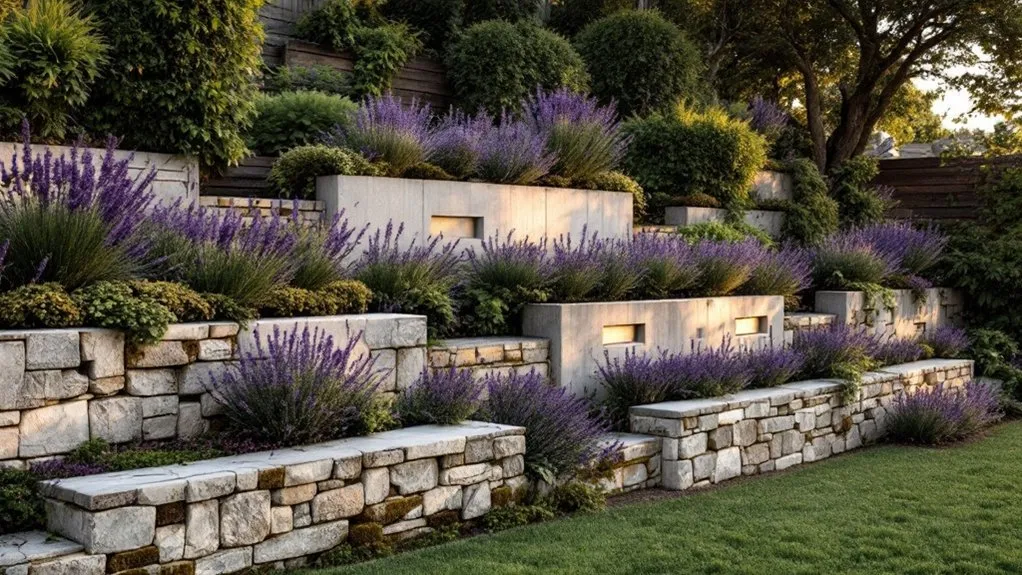
Terraced garden walls transform sloping landscapes into dramatic multilevel displays that catch the eye and maximize planting opportunities.
You’ll create stunning visual depth by building stepped retaining structures that follow your property’s natural contours. Each level becomes a unique planting zone, allowing you to showcase different flowers, shrubs, or vegetables at varying heights.
Consider these terraced designs:
- Cascading stone steps with ornamental grasses flowing between each level
- Curved timber terraces featuring colorful perennials that spill over edges
- Stacked block walls create geometric planting pockets for succulents and herbs
You’ll turn challenging slopes into your landscape’s most enchanting feature.
Mixed Material Combinations for Unique Character
Blending different materials in your retaining wall design creates a distinctive character that sets your landscape apart from cookie-cutter installations. You’ll achieve stunning visual contrast by combining textures, colors, and materials strategically.
| Material Combination | Design Effect |
|---|---|
| Stone + Steel | Modern industrial aesthetic |
| Concrete + Wood | Contemporary warmth |
| Brick + Natural Stone | Classic elegance |
| Gabion + Timber | Rustic sophistication |
Consider alternating materials in horizontal bands or creating geometric patterns. You can use steel frames with stone infill, wooden caps on concrete bases, or brick accents within natural stone walls. These combinations add depth while maintaining structural integrity and visual appeal.
Curved and Serpentine Walls That Flow With Your Landscape
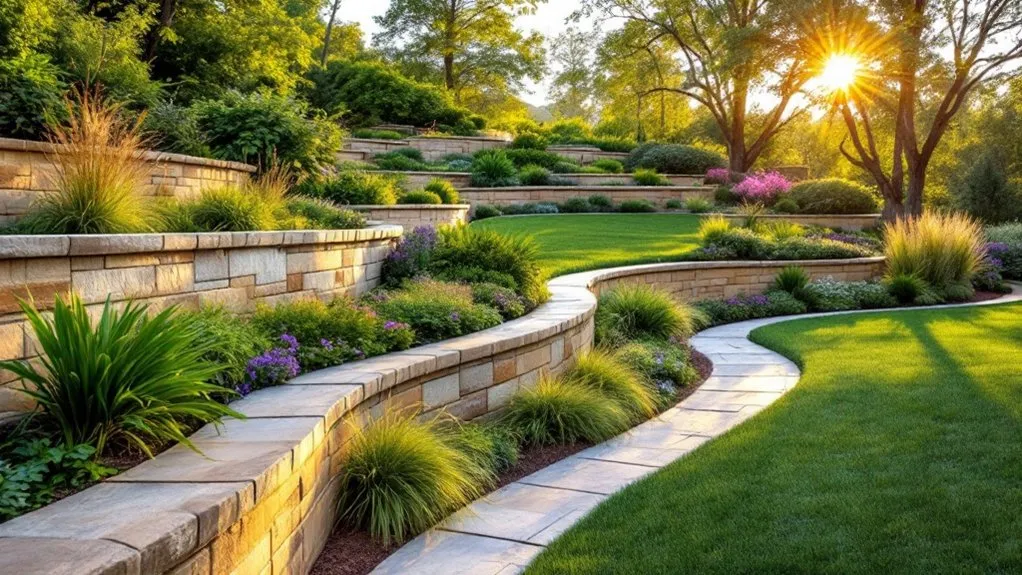
When you embrace curved and serpentine retaining wall designs, you’ll create flowing boundaries that harmonize naturally with your landscape’s existing contours.
These organic shapes soften harsh angles and transform functional structures into graceful garden features that complement rolling terrain.
Curved walls offer distinct advantages over traditional straight designs:
- Natural Integration – Your wall seamlessly follows the hillside slopes and property lines, creating a seamless connection between different elevation levels.
- Enhanced Visual Interest – Gentle curves draw the eye through your landscape, creating dynamic focal points and breaking up monotonous sightlines.
- Improved Structural Performance – Curved designs distribute soil pressure more effectively, reducing stress points while accommodating natural ground movement.
Integrated Lighting and Planting Solutions for Maximum Impact
Since retaining walls serve as prominent landscape features, you’ll maximize their visual impact by strategically combining lighting and plantings that work together as a unified design system.
Install LED strip lights beneath cap stones to create dramatic uplighting that highlights textural elements while providing safety illumination. Position spotlights to showcase specimen plants cascading over wall edges.
Choose plants with varying heights and textures—ornamental grasses, trailing succulents, and flowering perennials create visual layers. Incorporate built-in planters during construction for seamless integration.
Use warm-toned lighting to enhance foliage colors during evening hours, transforming your retaining wall into a stunning nighttime focal point.
Frequently Asked Questions
What Permits Are Required for Building Retaining Walls Over 4 Feet Tall?
You’ll need a building permit for retaining walls over 4 feet tall in most municipalities.
Contact your local building department to determine specific requirements, as codes vary by location.
You’ll typically submit structural engineering plans that show proper drainage, foundation specifications, and soil analysis.
Some areas also require setback permits if you’re building near property lines.
Don’t start construction without proper permits—you’ll face fines and potential removal orders.
How Much Does Professional Retaining Wall Installation Typically Cost per Square Foot?
You’ll typically pay $15-$ 40 per square foot for professional retaining wall installation, depending on the materials and complexity.
Bare concrete block walls cost around $15-$25 per square foot, while natural stone or engineered systems cost $25-$40.
You’re likely to encounter higher costs for walls that require drainage systems, excavation in rocky soil, or complex designs.
Please note that you’ll also incur additional expenses for permits, soil preparation, and potential utility line marking before installation begins.
What Drainage Solutions Prevent Water Damage Behind Retaining Walls?
You’ll need proper drainage to prevent water buildup that can damage your retaining wall.
Install French drains behind the wall with perforated pipes and gravel backfill.
Add weep holes every 6-8 feet to allow water to escape.
Use drainage fabric to prevent soil clogging.
Include a gravel base layer and backfill with free-draining materials, such as crushed stone.
Don’t forget to install surface drainage, such as gutters, to redirect water away from the wall area.
How Long Do Different Retaining Wall Materials Typically Last Before Replacement?
You’ll find concrete retaining walls last 50-100 years with proper maintenance, while natural stone can endure even longer.
Treated timber walls typically require replacement after 10-20 years, depending on the quality of the wood and the level of climate exposure.
Steel walls last 30-50 years but require rust prevention.
Interlocking blocks offer lifespans of 25 to 50 years.
You’ll extend any wall’s life by ensuring proper drainage, using quality materials, and performing regular inspections to catch issues early.
Can I Build a Retaining Wall Myself or Must I Hire Professionals?
You can build smaller retaining walls yourself if you’re handy with tools and understand basic construction principles.
DIY works well for walls under 3-4 feet tall, using materials such as timber or interlocking blocks. However, you’ll need professionals for taller walls, complex drainage issues, or structural concerns.
Check local building codes first—many areas require permits and professional engineering for walls over certain heights.
Don’t risk safety or property damage.