
You can create a stunning fire pit seating area by integrating retaining walls that serve dual purposes in your backyard. Consider curved stone walls that follow natural contours at 18-24 inches high, or tiered designs with built-in storage for sloped yards. Multi-level terraced seating creates amphitheater-style gathering spaces, while contemporary concrete blocks with planters offer modern appeal. Rustic fieldstone walls provide authentic charm with cushioned comfort. Each approach transforms challenging terrain into functional entertainment areas that’ll elevate your outdoor living experience.
Key Takeaways
- Curved stone walls create intimate, circular seating that follows natural landscape contours at heights of 18-24 inches for optimal comfort.
- Tiered retaining walls transform slopes into functional seating with waterproof storage compartments for cushions, firewood, and accessories.
- Multi-level terraced designs create amphitheater-style seating that maximizes capacity while preventing soil erosion on sloped yards.
- Contemporary concrete blocks feature planters integrated between seating sections, offering a sleek, minimalist design with staggered heights for added visual appeal.
- Rustic fieldstone walls offer a natural texture and character, stacked without mortar for optimal drainage while providing weather-resistant support.
Curved Stone Wall Seating for Natural Flow
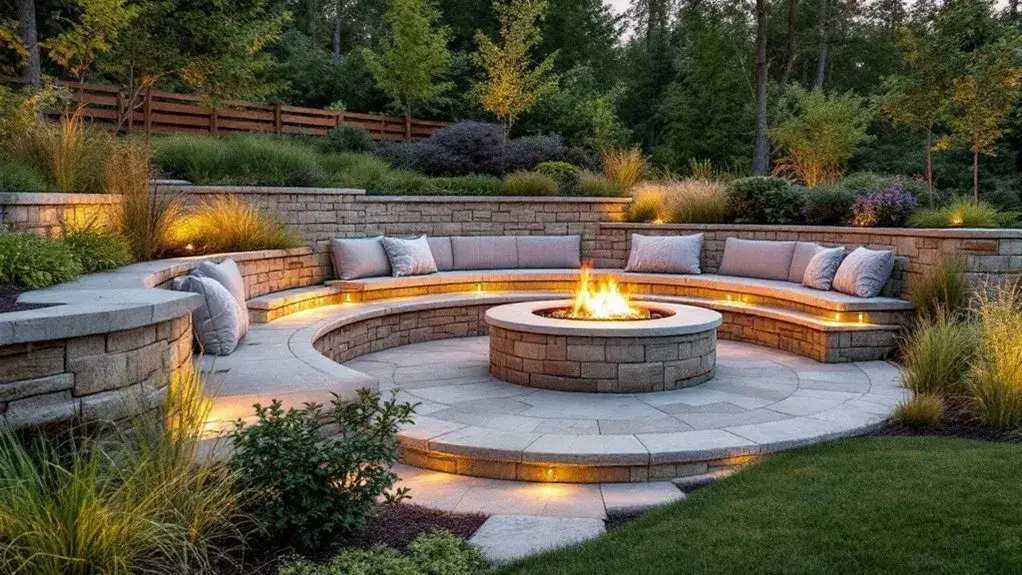
When designing a fire pit area that feels organic and inviting, curved stone wall seating creates the perfect balance between functionality and natural aesthetics.
You’ll follow the natural contours of your landscape while providing comfortable seating for multiple guests. Select materials such as fieldstone or stacked limestone that complement the existing elements of your outdoor space.
Build the wall at a height of eighteen to twenty-four inches for ideal seating comfort, and cap it with smooth, flat stones. The curved design eliminates sharp corners, creating a safer environment for movement around the fire while encouraging conversation through its intimate, circular gathering arrangement.
Tiered Retaining Walls With Built-In Bench Storage
Two distinct levels of retaining walls transform sloped terrain into functional firepit seating while maximizing your storage potential.
You’ll create spacious bench seating on the upper tier while the lower wall provides additional perimeter seating around your fire feature.
Consider these storage solutions for your tiered design:
- Waterproof compartments beneath bench seats for cushions, firewood, and outdoor games
- Pull-out drawers integrated into wall faces for easy access to fire-starting supplies
- Hidden hinges on bench tops that lift completely for seasonal equipment storage
This dual-purpose approach efficiently uses vertical space while providing ample seating for entertaining guests.
Multi-Level Terraced Seating for Sloped Yards
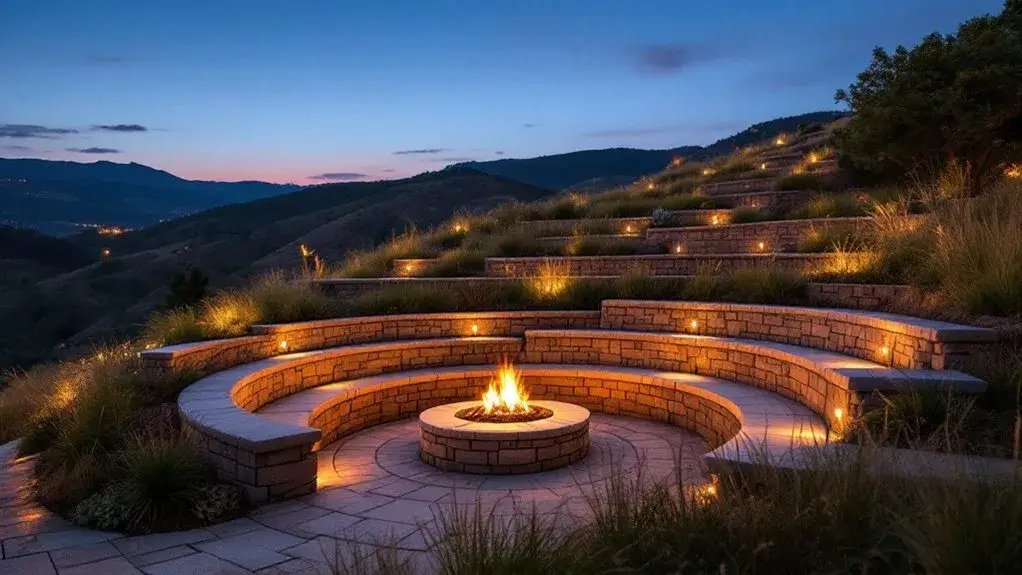
Sloped yards present unique opportunities to create amphitheater-style seating that naturally draws people toward your fire pit.
You’ll build multiple terraced levels using retaining walls at varying heights, creating distinct seating zones that follow the natural contours of your yard.
Start with the lowest level closest to the fire, then step up each successive tier. This design maximizes capacity while ensuring that everyone has clear sightlines and access to heat.
You can vary the width of each level and incorporate different materials, such as stone, timber, or concrete blocks.
The terraced approach also helps prevent soil erosion while creating a dramatic visual appeal.
Contemporary Concrete Block Designs With Integrated Planters
Modern concrete blocks offer sleek, minimalist firepit seating that doubles as living architecture when planter boxes are integrated directly into the design.
You’ll create striking visual contrast by alternating solid seating blocks with hollow planters filled with ornamental grasses or seasonal flowers.
Consider these design approaches:
- Staggered Heights – Vary block elevations to create dynamic seating levels while incorporating planters at different heights.
- Corner Integration – Position planters at seating corners to soften hard edges and define conversation zones.
- Continuous Flow – Design seamless connections between seating and planting areas using matching concrete finishes.
This approach transforms functional seating into sculptural landscape elements.
Rustic Fieldstone Walls With Cushioned Seating Areas
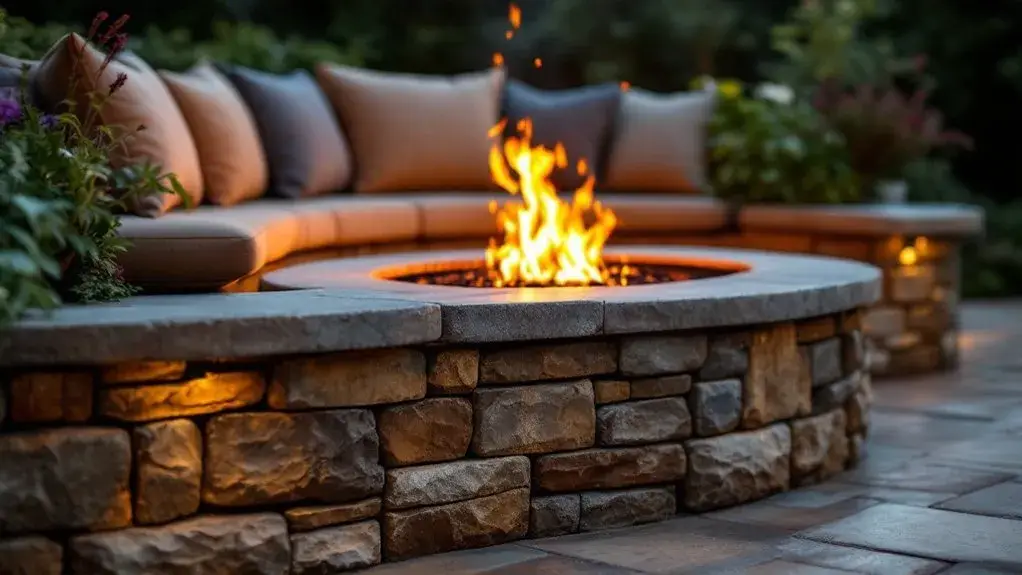
When you’re seeking warmth and natural character around your fire pit, rustic fieldstone walls create inviting seating that blends seamlessly with your outdoor landscape.
You’ll find these irregular stones offer authentic texture while providing sturdy support for extended gathering sessions. Build walls 18-20 inches high to accommodate standard cushions comfortably.
Stack stones without mortar to allow for drainage, enabling water to escape through the gaps. Choose weather-resistant outdoor cushions in earth tones that complement the stone’s natural colors.
You can add storage underneath for cushion protection during harsh weather. This combination delivers both rustic charm and practical comfort for memorable fireside evenings.
Frequently Asked Questions
What Permits Are Required for Building a Fire Pit Seating Area With Retaining Walls?
You typically need building permits for retaining walls that are over 4 feet tall and separate permits for permanent fire features.
Check your local zoning laws since setback requirements vary by municipality. You’ll also need utility clearance if you’re installing gas lines.
Don’t forget to obtain homeowner’s association approval, if applicable. Contact your city’s building department early in the planning process, as permit processing can take weeks.
Some areas require engineered drawings for structural elements exceeding certain heights.
How Much Does It Typically Cost to Install Integrated Firepit Seating?
You’ll typically spend $3,000 to $8,000 for the installation of integrated firepit seating.
Bare concrete or stone bench designs typically start around $2,500, while premium materials, such as natural stone or custom masonry, can reach $ 12,000 or more.
You’re looking at $150 to $300 per linear foot for most projects.
Labor accounts for 60% of costs, with materials making up the remainder.
Complex designs with electrical or gas lines can significantly increase expenses.
What's the Recommended Distance Between Firepit and Seating for Safety?
You’ll want to maintain a distance of 6-8 feet between your fire pit and seating for optimal safety. This distance prevents burns from sparks or embers while still allowing you to enjoy the warmth.
If you’re using a gas fire pit, you can position seating slightly closer, at 4-6 feet, since there’s less risk of flying sparks.
Always check local fire codes, as they may require specific setbacks.
Consider wind patterns in your yard when finalizing placement.
How Do You Maintain and Clean Different Retaining Wall Materials?
You’ll maintain concrete retaining walls by pressure washing annually and sealing cracks promptly.
For natural stone, brush away debris and repoint mortar joints when needed.
Clean timber walls with a mild detergent and apply a wood preservative annually.
Remove weeds from block walls and inspect for any signs of shifting.
Don’t let water pool behind any wall – guarantee proper drainage.
Inspect all materials seasonally for damage, loose stones, or structural issues that need immediate attention.
Can Integrated Seating Walls Be Added to Existing Firepits?
You can definitely add integrated seating walls to your existing firepit.
You’ll need to assess the structural integrity of your current setup and the available space first. Consider building curved or straight retaining walls around the perimeter of your fire pit, leaving adequate clearance for safety.
Choose materials that complement your existing fire pit design, such as matching stone or brick. You’ll want to guarantee proper drainage and stable foundations.
This retrofit project can transform your basic fire pit into an inviting gathering space.
Conclusion
You’ll transform your outdoor space into a functional gathering spot by choosing the right retaining wall seating combination. Whether you’re working with slopes, tight budgets, or specific design preferences, there’s a solution that’ll meet your needs. Don’t forget to consider drainage, local building codes, and winter weather conditions when planning. With proper installation, you’ll create a durable firepit area that’ll serve as your family’s favorite outdoor retreat for years.