When choosing a concrete coating, you’ll first need to assess your concrete’s condition by checking for cracks, moisture issues, and surface hardness using simple tests such as the coin-scratch method. Match your coating type to specific needs: epoxy for garages and chemical resistance, polyurethane for UV protection, or acrylic for budget-friendly options. Consider your climate’s temperature fluctuations, humidity levels, and precipitation patterns, then factor in long-term costs versus upfront investment. This thorough approach guarantees the best coating selection for lasting results.
Key Takeaways
- Assess concrete condition for cracks, moisture, and surface texture to determine necessary preparation methods and coating compatibility.
- Match the coating type to specific use requirements, such as high traffic, chemical exposure, or outdoor UV protection.
- Consider local climate factors, including temperature fluctuations, humidity levels, and salt exposure, when selecting coating formulations.
- Evaluate total project costs, including surface preparation, coating materials, and potential reapplication over the coating’s lifespan.
- Choose the installation method based on your skill level, available time, and the complexity of the coating system.
Understanding Your Concrete's Current Condition and Surface Preparation Needs

Before you can select an effective concrete coating, you’ll need to thoroughly assess your existing surface’s condition and determine what preparation work lies ahead.
Look for cracks, stains, oil spots, or previous coating failures that’ll require specific treatments. Check for moisture issues by taping plastic sheets over sections—condensation underneath indicates trapped moisture.
Test surface hardness using a coin scratch test; soft concrete needs densifiers before coating. Examine the texture; smooth surfaces may need etching or grinding for proper adhesion.
Document these findings, as they’ll determine your coating choice, preparation methods, and the overall project timeline and budget.
Exploring Different Types of Concrete Coatings and Their Properties
Once you’ve evaluated your concrete’s condition, you’ll face several coating options, each with distinct performance characteristics and ideal applications.
Epoxy coatings offer exceptional durability and chemical resistance, making them perfect for garages and workshops.
Polyurethane offers superior UV protection and flexibility, making it ideal for outdoor surfaces.
Acrylic coatings deliver quick application and decent protection at budget-friendly prices.
Polyaspartic systems cure rapidly with excellent abrasion resistance, though they’re pricier.
Penetrating sealers soak into concrete pores, providing natural-looking protection without surface buildup.
Each option balances factors like cost, durability, appearance, and installation complexity differently.
Matching Coating Performance to Your Specific Use Requirements
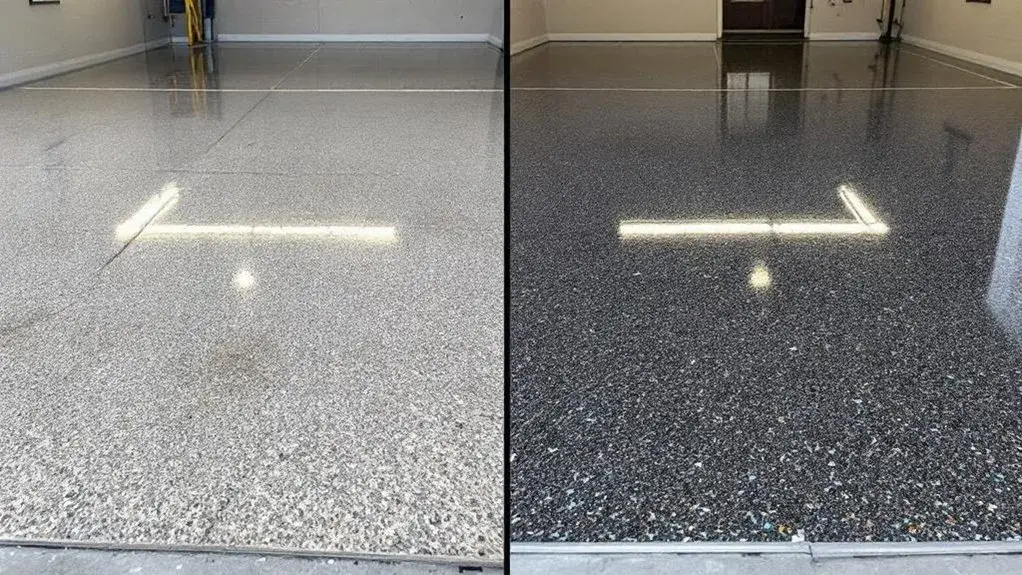
How do you determine which coating truly matches your concrete’s intended use? Start by analyzing your space’s specific demands.
High-traffic areas like garages need abrasion-resistant coatings, while basement floors require moisture barriers.
Chemical exposure from automotive fluids calls for chemically resistant options such as polyurethane or polyaspartic coatings.
Consider temperature fluctuations—outdoor surfaces need UV-stable formulations that won’t yellow or crack.
Factor in maintenance preferences too. Epoxy requires regular cleaning but offers durability, while acrylic sealers need frequent reapplication, but they’re budget-friendly.
Match your coating’s performance characteristics—chemical resistance, durability, temperature tolerance, and maintenance requirements—to your concrete’s actual usage patterns for best results.
Climate Considerations and Environmental Factors
Since weather patterns directly impact coating longevity, you’ll need to evaluate your local climate before making a selection.
Temperature fluctuations cause concrete to expand and contract, requiring flexible coatings in areas with extreme seasonal changes. High humidity demands moisture-resistant options, while UV-intense regions need coatings with superior fade protection.
Consider your area’s precipitation levels—frequent rain or snow requires excellent water resistance.
Salt exposure from winter de-icing or coastal environments necessitates corrosion-resistant formulations. Freeze-thaw cycles demand coatings that won’t crack under thermal stress.
Chemical exposure from nearby industrial activities also influences your choice, requiring specialized protective properties.
Budget Planning and Long-Term Cost Analysis
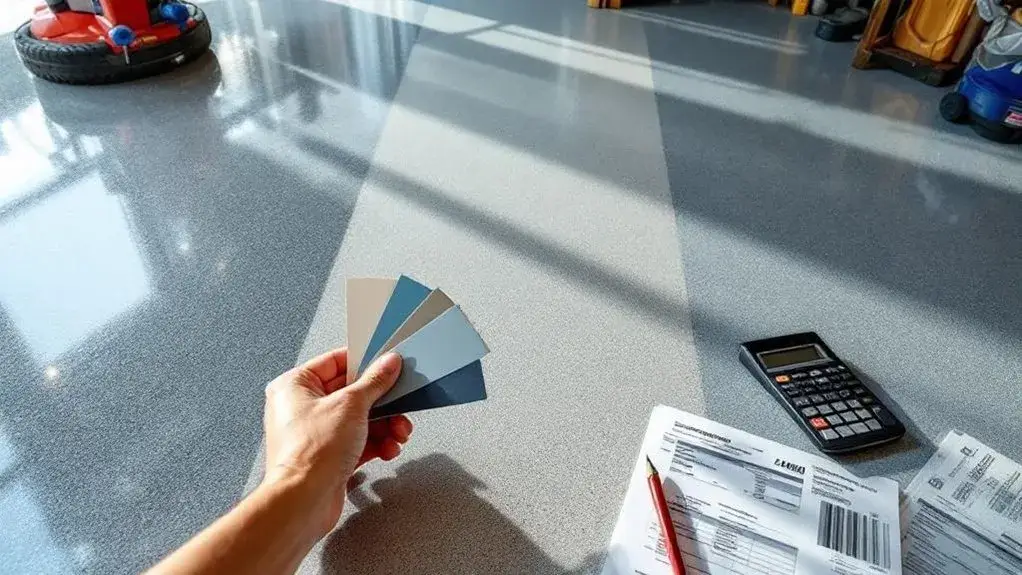
After identifying the right coating type for your climate, you’ll face the financial reality of your project.
Don’t just consider upfront costs—factor in long-term value as well. Premium coatings cost more initially but often last decades with minimal maintenance.
Calculate cost per square foot over the coating’s expected lifespan, including reapplication needs—budget for surface preparation, which can equal coating costs.
Consider DIY versus professional installation; mistakes with epoxy or polyurethane can be expensive to fix. Include ongoing maintenance costs, such as cleaning supplies and occasional touch-ups.
Quality coatings protect your concrete investment, while cheaper options may require frequent replacement.
Application Methods and Professional vs. DIY Installation
While budget considerations shape your coating choice, the application method you select will determine your project’s success.
DIY installation saves money but demands proper surface preparation, precise mixing, and ideal weather conditions. You’ll need specialized tools and technical knowledge to achieve professional results.
Professional installers bring expertise, equipment, and warranties. They’ll handle surface grinding, crack repairs, and multi-coat applications efficiently. However, you’ll pay considerably more for their services.
Consider your skill level, available time, and project complexity.
Simple single-coat systems suit DIY projects, while complex epoxy or polyurethane systems often require professional application for peak performance and longevity.
Frequently Asked Questions
How Long Should I Wait Before Walking on Newly Coated Concrete?
You should wait 24-48 hours before walking on newly coated concrete.
The exact time depends on your coating type, temperature, and humidity levels.
Epoxy coatings typically need 24 hours for foot traffic, while polyurethane might require 48 hours.
Don’t rush the process – walking too early can damage the finish and create permanent marks.
Check your manufacturer’s instructions for specific curing times, and test a small corner area first if you’re unsure.
Can Concrete Coatings Be Applied Over Existing Paint or Sealers?
You can’t apply concrete coatings directly over existing paint or sealers.
These prior treatments create a barrier that prevents proper adhesion, leading to your new coating peeling or failing prematurely.
You’ll need to remove all existing paint and sealers first through grinding, chemical stripping, or sandblasting.
After removal, clean the surface thoroughly and let it dry completely before applying your new concrete coating for best results.
What Happens if It Rains During the Coating Application Process?
Rain during concrete coating application will ruin your project.
You’ll need to stop work immediately and protect any wet coating from water exposure.
Rain can cause bubbling, poor adhesion, and uneven finishes.
You should wait for arid conditions before starting and monitor weather forecasts carefully.
If rain occurs, you’ll likely need to remove the damaged coating and restart the application process once surfaces are thoroughly dry.
How Do I Properly Maintain and Clean My Coated Concrete Surfaces?
You’ll maintain your coated concrete by regularly sweeping away debris and mopping with mild soap and water.
Avoid harsh chemicals or abrasive cleaners, as they can damage the coating. For stubborn stains, use a soft brush with a gentle detergent. Rinse thoroughly after cleaning.
Apply a fresh topcoat every few years, depending on traffic and wear.
Don’t let spills sit too long, and promptly clean oil or grease stains to prevent penetration.
Are Concrete Coatings Safe for Pets and Children Once Fully Cured?
Yes, most concrete coatings are safe for pets and children once they’re fully cured.
You’ll need to wait for complete curing, which typically takes 24-72 hours, depending on the product. During this time, keep pets and kids away from the area.
Once cured, the coating forms a non-toxic, sealed surface that’s actually easier to clean and more hygienic than untreated concrete.
Always check the manufacturer’s safety data sheet for specific guidelines.