
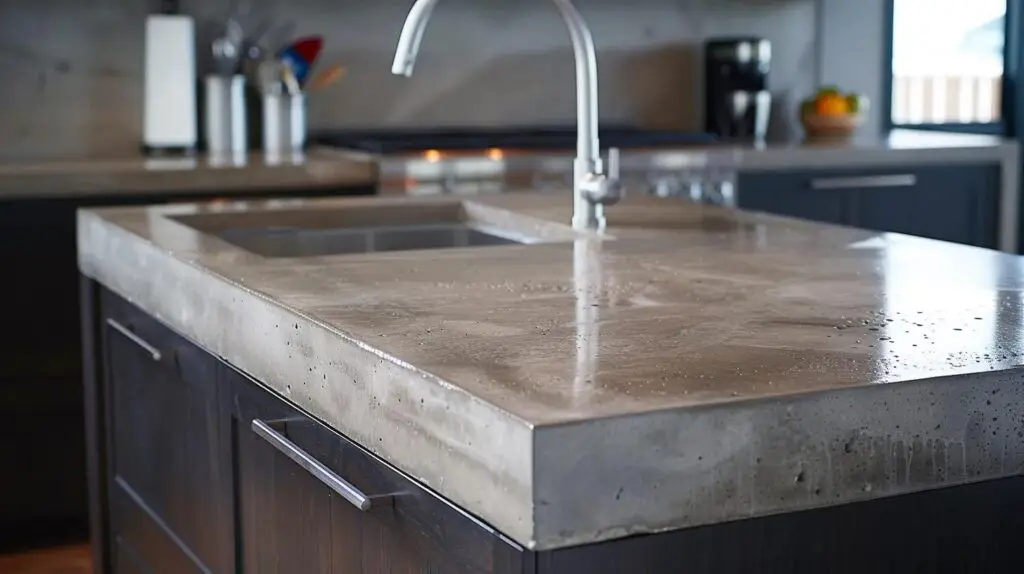
You’ll find that concrete countertops offer exceptional design flexibility, with customizable colors, textures, and integrated features such as sinks and drainboards, priced at $65-135 per square foot, professionally installed. They’re durable when properly sealed and complement a range of design styles, from modern to farmhouse. Installation takes 7-14 days, including curing time. Maintenance involves regular sealing and immediate cleanup of spills to prevent stains. The industrial aesthetic and affordability make them increasingly popular alternatives to natural stone. Exploring further reveals thorough planning strategies for your renovation.
Key Takeaways
- Concrete countertops offer versatile customization through color pigments, textures, integrated sinks, and decorative edge profiles to match any design style.
- Professional installation costs $65-135 per square foot, while DIY projects range from $20-40 per square foot for materials only.
- Installation typically takes 7-14 days, including templating, pouring, 24-48-hour curing, grinding, polishing, and sealing.
- Proper sealing creates durable surfaces that resist heat, scratches, and stains when maintained correctly over time.
- Design flexibility includes smooth to exposed-aggregate textures, custom colors, and integrated elements such as drainboards and cutting boards.
Understanding the Appeal of Concrete Countertops
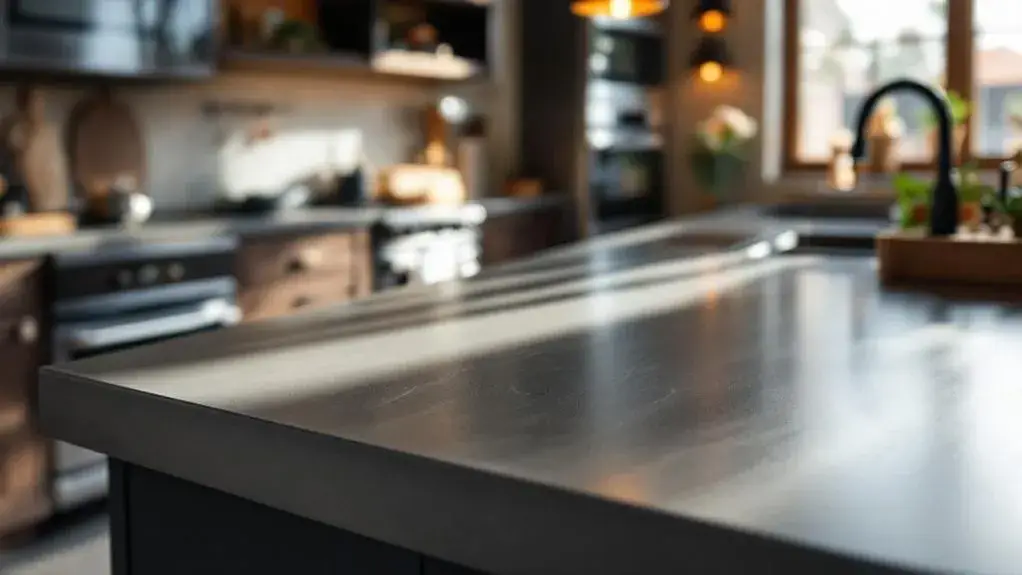
Versatility makes concrete countertops increasingly popular among homeowners seeking distinctive kitchen surfaces.
You’ll discover endless customization options through color pigments, aggregates, and textures that create unique patterns impossible with traditional materials. Concrete’s moldability allows you to craft integrated sinks, drainboards, and decorative edges tailored to your space’s exact dimensions.
You’ll appreciate concrete’s durability when properly sealed—it resists heat, scratches, and stains while developing character over time.
The industrial aesthetic complements modern, farmhouse, and contemporary designs equally well. Unlike expensive natural stone, concrete offers premium looks at affordable prices, making high-end kitchen dreams accessible to budget-conscious homeowners.
Design Flexibility and Customization Options
While traditional countertop materials limit your design choices, concrete opens up a world of creative possibilities, transforming ordinary kitchens into personalized masterpieces. You can incorporate decorative aggregates, glass chips, or metal inlays directly into the mix. Color options are virtually limitless, using integral pigments or acid stains to create unique patterns.
| Customization Feature | Your Options |
|---|---|
| Edge Profiles | Bullnose, beveled, ogee, custom sculpted |
| Surface Textures | Smooth, brushed, exposed aggregate, stamped |
| Integrated Elements | Sinks, drainboards, trivets, cutting boards |
| Color Techniques | Integral pigments, acid stains, overlays |
| Decorative Additions | Glass, shells, stones, metal accents |
You’ll achieve truly one-of-a-kind results.
Color, Texture, and Finish Possibilities
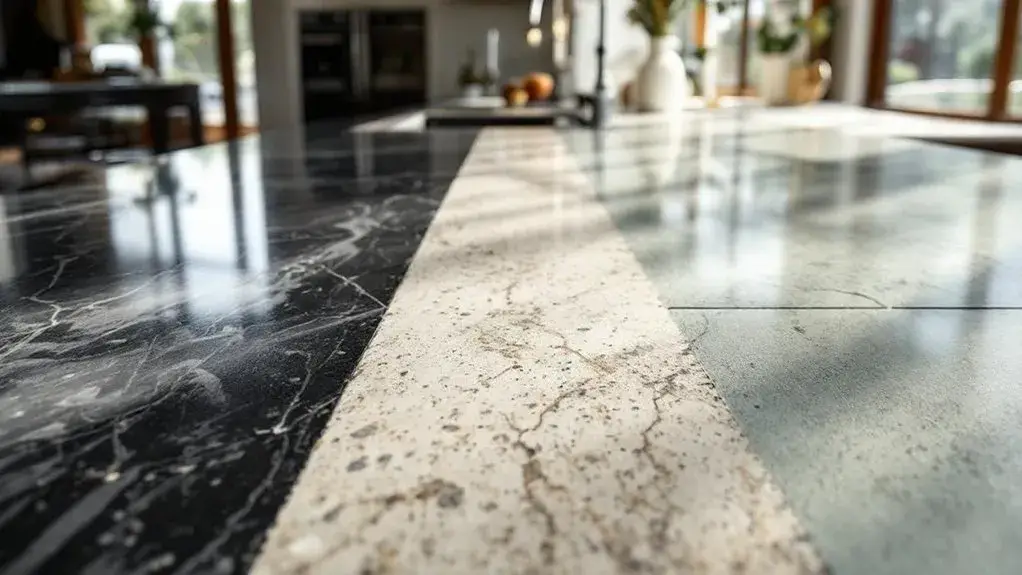
The aesthetic appeal of your concrete countertops depends heavily on the specific color, texture, and finish combinations you select. You can achieve rich, earthy tones using integral pigments or acid stains for vibrant hues.
Surface textures range from smooth, polished finishes to exposed aggregate or hand-troweled patterns that add visual interest. You’ll find finish options, including high-gloss sealing for modern aesthetics, matte surfaces for subtle sophistication, and decorative elements such as embedded glass, stone, or metal accents.
These choices let you create countertops that complement any design style, from industrial chic to rustic farmhouse or contemporary minimalist aesthetics.
Cost Breakdown and Budget Considerations
Budgeting for concrete countertops involves several key expense categories you’ll need to factor into your project costs.
Material expenses typically range from $65-135 per square foot for professional installation, while DIY projects cost $20-40 per square foot in supplies. You’ll need concrete mix, reinforcement materials, forms, sealers, and specialized tools.
Labor is the largest expense in professional hiring, accounting for 60-70% of total costs. Additional factors include surface preparation, plumbing modifications, and decorative elements like integral colors or aggregates.
Complex designs, edge treatments, and custom features will significantly increase your overall investment.
Installation Process and Timeline
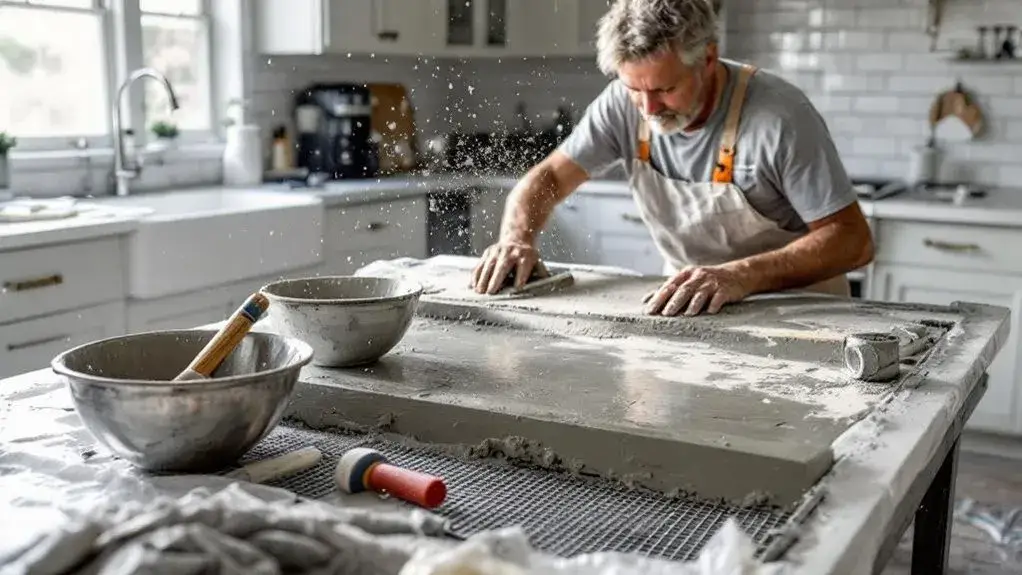
Once you’ve established your budget, understanding the concrete countertop installation timeline helps you plan around kitchen disruptions and coordinate with other trades.
The process typically spans 7-14 days. Initial steps include templating and forming, taking 1-2 days. Pouring and initial curing require 24-48 hours, during which you can’t use the surface.
Grinding, polishing, and sealing add another 3-5 days, with multiple coats applied. You’ll experience kitchen downtime during active work periods.
Professional installers often work in sections to minimize disruption. Weather and humidity affect curing times, potentially extending the schedule.
Plan temporary cooking arrangements and coordinate plumbing reconnections accordingly.
Essential Maintenance Requirements
After your concrete countertops are installed and fully cured, you’ll need to maintain them properly to preserve their appearance and durability.
Clean daily with mild soap and water, and avoid acidic cleaners, which can etch the surface. Wipe up spills immediately, especially oils and acids like lemon juice or vinegar.
Reapply sealer every one to three years, depending on usage and wear patterns. Use cutting boards and trivets to prevent scratches and heat damage.
Monthly deep cleaning with pH-neutral products keeps surfaces looking fresh. Address minor scratches promptly with fine sandpaper and touch-up sealer to prevent more serious damage.
Preventing Stains and Surface Damage
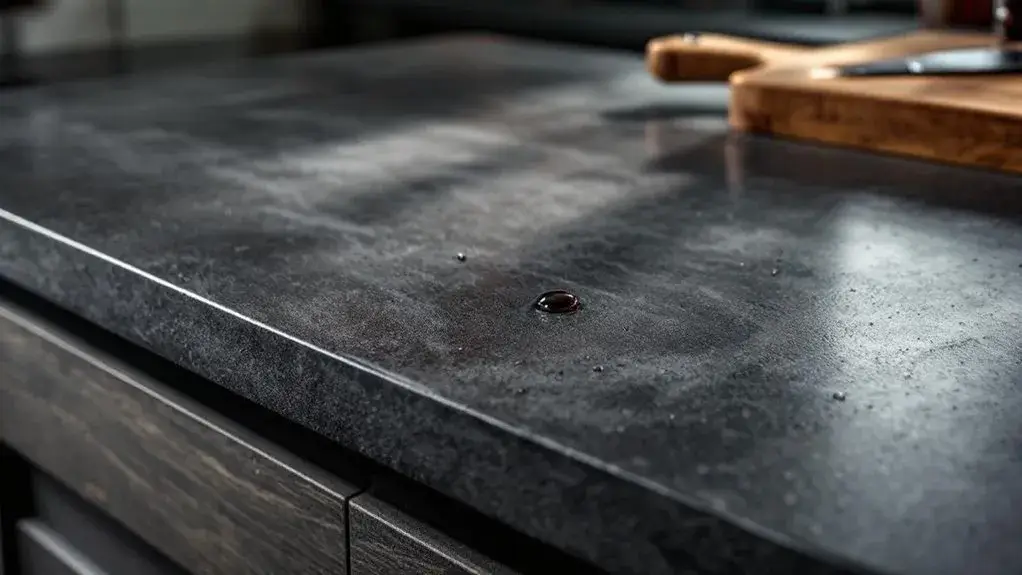
While proper maintenance is the foundation of countertop care, preventing stains and surface damage requires specific protective strategies beyond routine cleaning.
You’ll need to seal your concrete countertops every 1-2 years using penetrating or topical sealers. Always use cutting boards, trivets, and coasters to protect surfaces from knives, hot pans, and acidic liquids.
Wipe up spills immediately, especially wine, citrus juice, and oils, which can penetrate unsealed concrete. Apply paste wax monthly for additional protection.
Avoid abrasive cleaners and scouring pads that can scratch the surface and compromise your sealer’s effectiveness.
Comparing Concrete to Other Countertop Materials
Understanding how concrete countertops compare with other popular materials helps you make an informed decision for your kitchen or bathroom renovation.
Concrete costs $65-135 per square foot installed, falling between laminate ($20-50) and natural stone ($100-200). Unlike granite’s limited pattern options, you can customize concrete’s color, texture, and shape.
Concrete requires more maintenance than quartz but offers superior heat resistance compared to laminate. While marble stains easily, properly sealed concrete resists most spills.
Concrete’s durability matches granite’s longevity but demands periodic resealing. You’ll get unique aesthetics at a moderate price, though installation complexity exceeds that of most alternatives.
Frequently Asked Questions
Can Concrete Countertops Be Repaired if They Crack or Chip?
Yes, you can repair concrete countertops when they crack or chip.
You’ll mix the concrete patching compound to match your countertop color, thoroughly clean the damaged area, and apply the patch material.
After it cures, you’ll sand it smooth and reseal the entire surface.
Small chips are easier to fix than large cracks, but most damage is repairable with the right materials and techniques.
How Long Do Concrete Countertops Typically Last Before Needing Replacement?
You can expect concrete countertops to last 20-30 years or more with proper care and maintenance.
They’re incredibly durable when professionally installed and sealed correctly.
Your countertops’ lifespan depends on how well you maintain the protective sealant, avoid heavy impacts, and address minor issues promptly.
With regular resealing every 1-3 years and gentle daily care, you’ll likely never need complete replacement—just occasional refinishing to keep them looking fresh.
Are Concrete Countertops Safe for Food Preparation and Cooking?
Yes, concrete countertops are safe for food preparation when properly sealed.
You’ll need to apply a food-safe sealer that creates a non-porous barrier against bacteria and stains.
Make sure you’re using cutting boards when chopping, as concrete can dull knives and scratching exposes unsealed areas.
You’ll want to reseal every few years to maintain safety standards.
With proper sealing and maintenance, you can confidently prepare meals on concrete surfaces.
What Tools and Equipment Are Needed for DIY Concrete Countertop Installation?
You’ll need a circular saw with a diamond blade, a drill, a mixing paddle, a wheelbarrow or large bucket, trowels, floats, and screeds for installation.
Don’t forget safety gear like gloves, goggles, and dust masks.
You’ll also need forms or molds, reinforcement materials such as rebar or mesh, concrete mix, release agents, and finishing tools such as grinders and polishers.
A vibrator helps eliminate air bubbles, while levels guarantee proper alignment throughout the process.
Do Concrete Countertops Affect Home Resale Value Positively or Negatively?
Concrete countertops can positively affect your home’s resale value when professionally installed and well-maintained.
They’re trendy and appeal to buyers seeking industrial or modern aesthetics.
However, they may reduce value if they exhibit cracks, stains, or poor craftsmanship.
Your local market matters too – concrete works better in contemporary neighborhoods than traditional ones.
Quality installation and proper sealing are essential for maintaining their appeal to potential buyers.