
You’ll dramatically enhance your home’s safety and visual appeal with epoxy coatings that incorporate anti-slip additives, such as aluminum oxide, for improved traction on wet surfaces. These versatile solutions offer stunning aesthetic options, from decorative flakes that create natural stone patterns to metallic finishes that produce dramatic marbled effects. They’re perfect for high-risk areas like garages, kitchens, and basements where spills occur frequently. The seamless, stain-resistant surface eliminates constant maintenance while lasting 15-20 years, making them a smart long-term investment that transforms ordinary floors into beautiful, secure focal points throughout your living space.
Key Takeaways
- Non-slip epoxy surfaces incorporate anti-slip additives like aluminum oxide, providing essential traction on wet floors in garages and kitchens.
- Epoxy offers versatile aesthetic options, including solid colors, decorative flakes, metallic marbled effects, and various finish textures.
- High-traffic areas like garage floors and basement surfaces benefit from epoxy’s oil resistance and moisture protection capabilities.
- Seamless epoxy surfaces eliminate grout lines and cracks, preventing dirt accumulation while resisting scratches from furniture and pets.
- Epoxy coatings transform ordinary floors into stunning focal points, lasting 15-20 years with minimal maintenance.
The Safety Benefits of Non-Slip Epoxy Surfaces
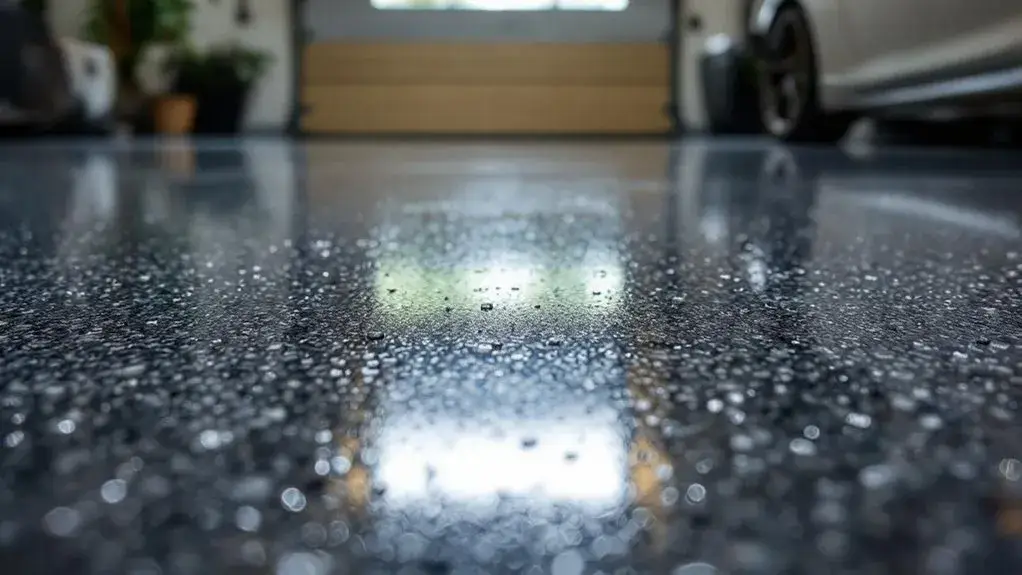
When you’re walking across wet floors or navigating high-traffic areas in your home, non-slip epoxy coatings provide essential traction to prevent dangerous falls.
These specialized surfaces incorporate anti-slip additives like aluminum oxide or silica sand, creating microscopic textures that grip your shoes effectively.
You’ll particularly benefit from this enhanced safety in garages, basements, laundry rooms, and kitchens, where spills are everyday.
Unlike traditional flooring, which becomes treacherous when wet, non-slip epoxy maintains its grip even in the presence of moisture.
This protective feature considerably reduces liability risks while ensuring your family’s safety throughout daily activities.
Aesthetic Versatility: Colors, Patterns, and Finishes Available
While epoxy coatings deliver exceptional safety benefits, they don’t require you to sacrifice style for functionality.
You’ll discover an impressive range of aesthetic options that transform ordinary floors into stunning focal points.
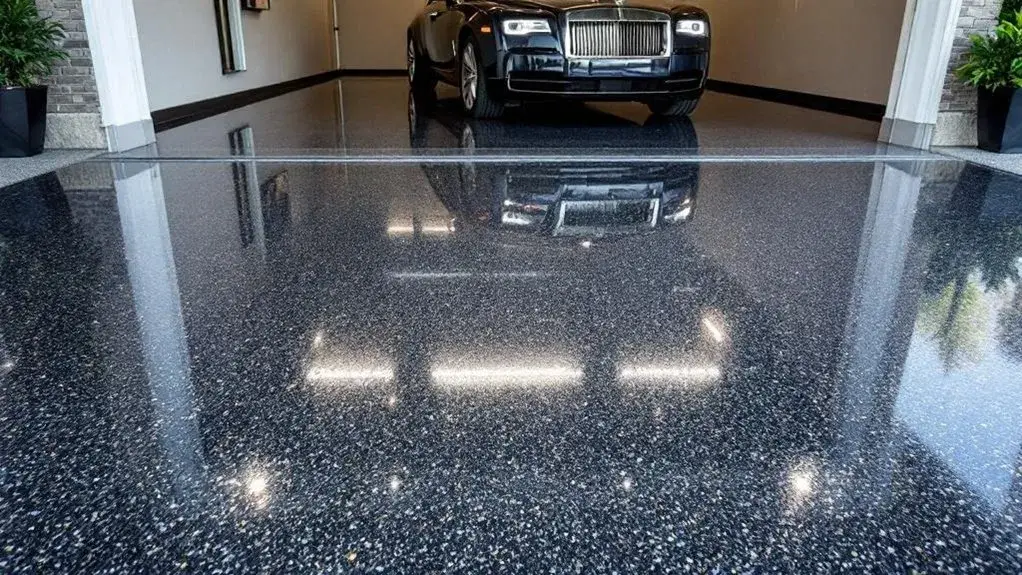
Choose from solid colors spanning neutral grays and beiges to bold blues and reds. You can select decorative flakes that create speckled patterns mimicking natural stone or terrazzo.
Metallic epoxies produce dramatic, marbled effects with depth and shimmer.
Finish options include high-gloss surfaces that reflect light beautifully, satin finishes that offer subtle elegance, or textured coatings that provide both grip and visual interest throughout your home.
Key Areas Where Epoxy Coatings Excel in Home Applications
Beyond their visual appeal, epoxy coatings prove their worth in specific areas of your home where durability and performance matter most.
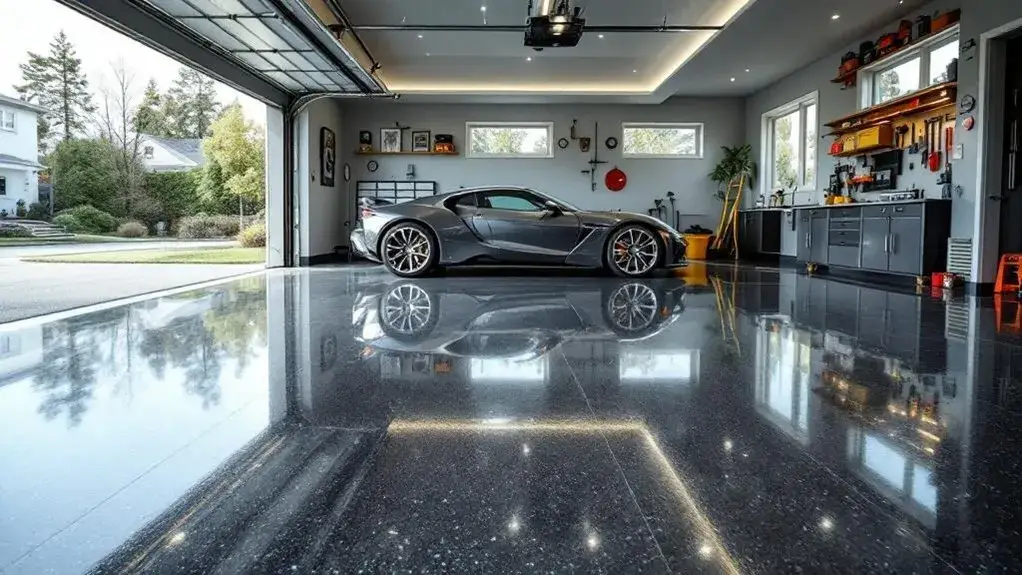
Your garage floor benefits from oil resistance and heavy traffic tolerance.
Kitchen countertops gain stain resistance and easier cleanup.
Basement floors resist moisture damage and create warmer surfaces.
Bathroom applications prevent water damage while maintaining slip resistance.
Laundry rooms handle chemical spills from detergents effortlessly.
Workshop areas withstand tool drops and chemical exposure.
Pool decks provide slip-resistant surfaces that won’t fade from chlorine or UV exposure.
Each application maximizes epoxy’s protective qualities where you need them most.
Durability and Maintenance Advantages for Busy Households
Since modern families juggle packed schedules, you’ll appreciate how epoxy coatings eliminate the constant maintenance required by traditional flooring.
You won’t need specialized cleaners or frequent refinishing treatments. Simple mopping removes spills, stains, and debris without scrubbing or harsh chemicals.
Epoxy’s seamless surface prevents dirt accumulation in grout lines and cracks that plague tile and hardwood floors.
You’ll save hours each week on cleaning while extending your floor’s lifespan considerably. The coating resists scratches from furniture, pet claws, and dropped items that would damage conventional surfaces.
This durability means fewer repairs and replacements, reducing long-term costs and household disruptions.
Cost-Effective Investment: Long-Term Value of Epoxy Solutions
Although epoxy coatings require a higher upfront investment than basic flooring options, you’ll recover these costs through reduced maintenance expenses and extended surface life.
Traditional floors need frequent repairs, refinishing, and eventual replacement. Epoxy eliminates these recurring costs, with surfaces lasting 15-20 years with minimal maintenance.
You’ll save money on cleaning supplies since epoxy requires only basic soap and water. The coating’s resistance to stains, chemicals, and damage prevents costly repairs from spills or heavy use.
When you calculate total ownership costs over decades, epoxy delivers superior value compared to repeatedly replacing cheaper flooring materials.
Frequently Asked Questions
How Long Does Epoxy Coating Installation Typically Take to Complete?
You’ll typically need 2-3 days for the complete installation of an epoxy coating.
Day one involves surface preparation and primer application.
You’ll apply the base coat on day two, then add decorative flakes if desired.
The final topcoat goes on day three.
However, you can’t walk on it immediately – you’ll wait 24-48 hours before light foot traffic and 7 days before heavy use or parking vehicles.
Can Epoxy Coatings Be Applied Over Existing Flooring Materials?
You can apply epoxy coatings over certain existing flooring materials, but it depends on the surface type and condition.
You’ll succeed with concrete, wood, and adequately prepared tiles. However, you can’t apply epoxy over carpeting, vinyl, or heavily damaged surfaces.
You’ll need to clean, sand, and prime most existing floors first. Always test adhesion in a small area before committing to the complete installation.
What Temperature and Humidity Conditions Are Required During Epoxy Application?
You’ll need to maintain temperatures between 60 and 85°F during epoxy application for ideal results.
Keep humidity below 85% to prevent moisture from interfering with the curing process.
Don’t apply epoxy when temperatures drop below 50°F or exceed 90°F, as this affects adhesion and finish quality.
You should also ensure your substrate temperature stays within 5°F of the air temperature to avoid condensation that can cause coating failures.
Are Epoxy Coatings Safe for Homes With Pets and Children?
Yes, you’ll find epoxy coatings are safe for homes with pets and children once they’re fully cured.
You shouldn’t allow access during application and curing, as wet epoxy can emit fumes and isn’t safe to touch.
After proper curing (typically 24-72 hours), you’ll have a non-toxic, durable surface that’s actually safer than many alternatives.
The smooth finish won’t harbor bacteria and cleans easily, making it ideal for family homes.
How Soon Can the Coated Surface Be Used After Installation?
You can typically walk on your epoxy-coated surface within 24-48 hours after installation, but you’ll need to wait 5-7 days before placing heavy furniture or equipment on it.
The curing time depends on temperature, humidity, and coating thickness.
Don’t rush the process—premature use can damage the finish and compromise durability.
Your installer will provide specific timing based on your particular coating system and environmental conditions for best results.