
You’ll achieve a perfect balance in pool landscaping by combining durable hardscape elements, such as stone patios and concrete decking, with carefully selected softscape features, including drought-tolerant plants and strategically placed greenery. Focus on creating defined functional zones for entertainment while maintaining clear sightlines for safety. Choose slip-resistant surfaces near water areas and position plants away from swimming zones to minimize debris. Proper planning ensures your hardscape provides structure, while your softscape adds natural beauty and seasonal interest throughout the year.
Key Takeaways
- Create distinct functional zones using hardscape for entertainment areas, while softscape provides natural privacy buffers and visual transitions.
- Select durable, slip-resistant hardscape materials, such as sealed pavers, that withstand year-round exposure to pool chemicals and moisture.
- Choose drought-tolerant plants positioned away from swimming areas to minimize debris while adding color and softening architectural lines.
- Maintain clear sightlines for safety supervision by strategically placing taller softscape elements that do not block pool visibility.
- Establish proper drainage systems and regular maintenance schedules for both hardscape cleaning and seasonal softscape care.
Understanding Hardscape and Softscape Elements in Pool Design
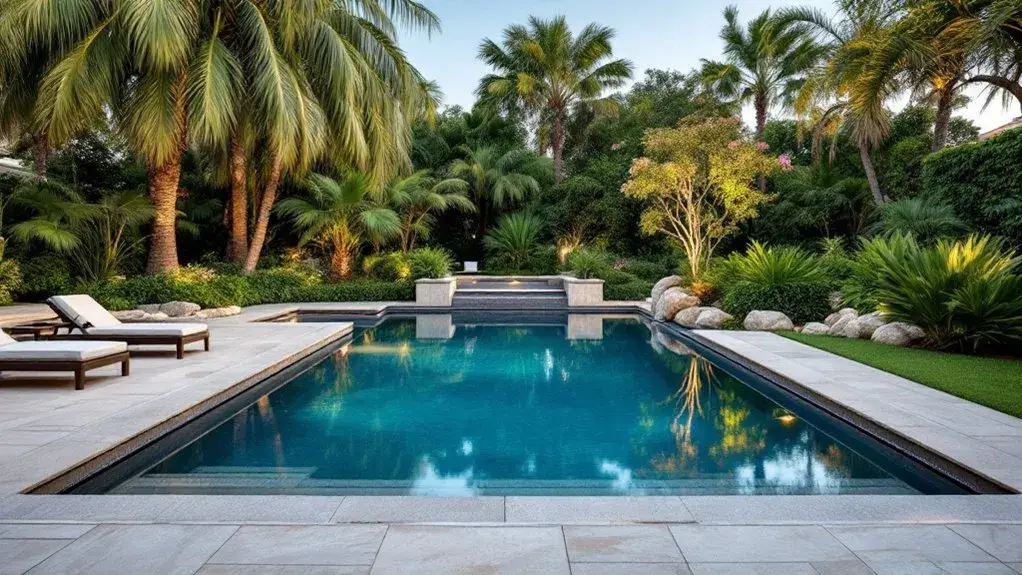
When designing your pool area, two fundamental elements shape the entire landscape: hardscape and softscape.
Hardscape includes permanent, structural features like concrete decking, stone patios, retaining walls, fire pits, and outdoor kitchens. These elements provide functionality and create defined spaces around your pool.
Softscape encompasses living components such as plants, trees, shrubs, grass, and flowers. These natural elements add color, texture, and seasonal interest while softening harsh architectural lines.
Understanding how these contrasting elements work together is essential to creating a cohesive pool environment that’s both visually appealing and functionally practical for your outdoor living needs.
Planning Your Pool Area Layout for Optimal Balance
Before diving into specific plant selections or material choices, you’ll need to map out your pool area’s functional zones and traffic patterns.
Think of your space as interconnected areas that serve different purposes while maintaining visual flow.
Start by identifying these key zones:
- Entertainment areas – Designate spaces for dining, lounging, and social gatherings using hardscape foundations.
- Transition pathways – Create clear routes between pool, house, and amenities with durable materials.
- Privacy buffers – Plan softscape placement to screen unwanted views while preserving desired sightlines.
This strategic approach guarantees balanced functionality.
Choosing the Right Hardscape Materials for Poolside Durability
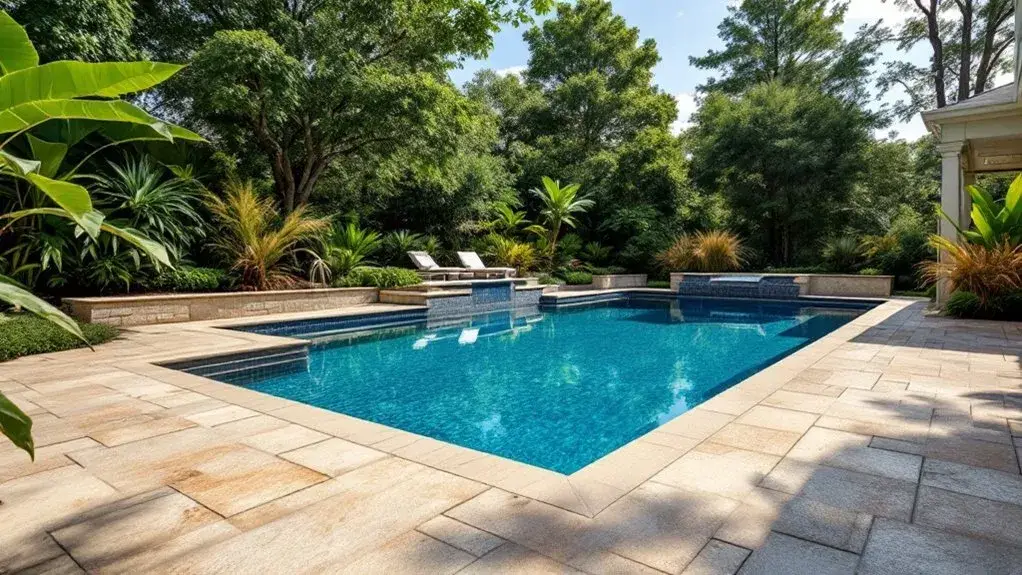
Since poolside environments expose materials to constant moisture, chemical splashes, and temperature fluctuations, you’ll want to prioritize durability alongside aesthetics when selecting your hardscape elements.
Natural stones like travertine and limestone offer excellent slip resistance and stay cool underfoot, though they require regular sealing.
Concrete pavers offer design versatility while withstanding harsh pool chemicals.
Porcelain tiles deliver superior water resistance and minimal maintenance, but can become slippery when wet.
Brick offers a timeless appeal with good traction but may deteriorate faster near saltwater pools.
Consider your climate, maintenance preferences, and safety requirements when making your final selection.
Selecting Pool-Friendly Plants and Softscape Features
While hardscape materials form the foundation of your pool area, the plants and softscape features you choose will determine whether your outdoor space feels like a resort oasis or a maintenance nightmare.
You’ll want species that won’t drop excessive leaves, create debris, or damage pool equipment with aggressive root systems.
Consider these pool-friendly landscaping options:
- Non-shedding evergreens like boxwood, juniper, and ornamental grasses that maintain year-round appeal
- Flowering perennials such as lavender, agapanthus, and daylilies that bloom without creating a mess
- Strategic placement keeping larger plants away from filtration systems and prevailing winds
Smart plant selection reduces maintenance while enhancing your pool’s visual appeal.
Creating Seamless Transitions Between Hard and Soft Elements
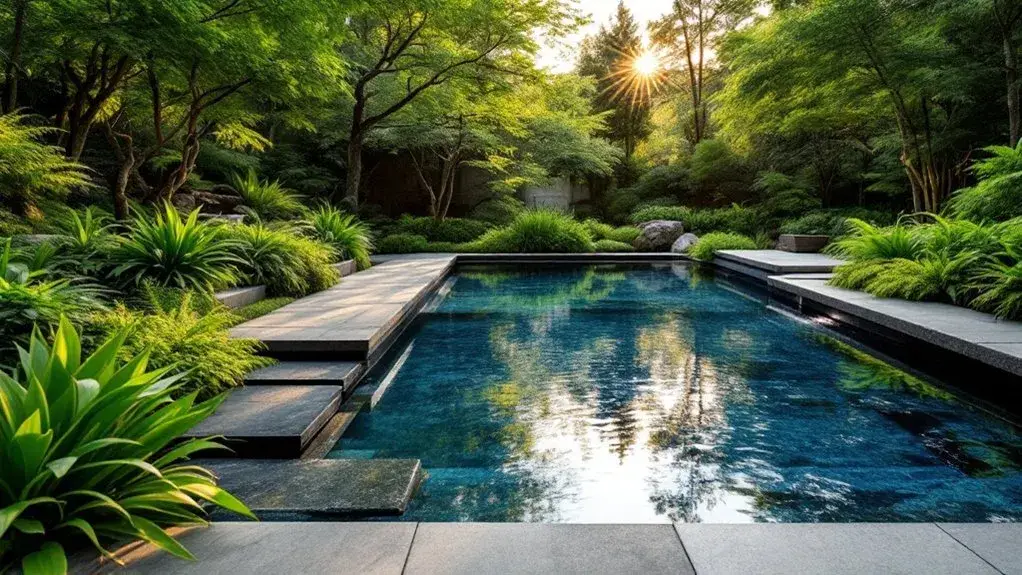
Once you’ve selected the right plants for your pool area, the real artistry begins in how you blend these softscape elements with your hardscape materials. You’ll want to create natural-looking borders where stone meets soil and where concrete shifts to greenery.
| Transition Type | Materials | Effect |
|---|---|---|
| Curved Borders | Flagstone, ornamental grasses | Softens rigid pool edges |
| Tiered Planting | Retaining walls, cascading plants | Creates depth and dimension |
| Mixed Pathways | Pavers with ground cover | Blends walking surfaces naturally |
Use varying plant heights and textures against your hardscape to avoid harsh lines and create visual flow throughout your space.
Safety Considerations When Combining Hardscape and Softscape
When planning your pool area’s design, prioritize safety alongside aesthetics to protect swimmers and guests.
Strategic placement of hardscape and softscape elements prevents accidents while maintaining visual appeal.
Consider these essential safety measures:
- Install slip-resistant surfaces around pool edges and wet areas, choosing textured stone or concrete over smooth materials that become dangerously slippery when wet.
- Position plants strategically by keeping thorny or toxic species away from swimming areas and walkways, while ensuring clear sightlines for supervision.
- Create proper drainage between hardscape materials to prevent water pooling and eliminate mosquito breeding grounds.
Maintenance Tips for Mixed Pool Landscaping
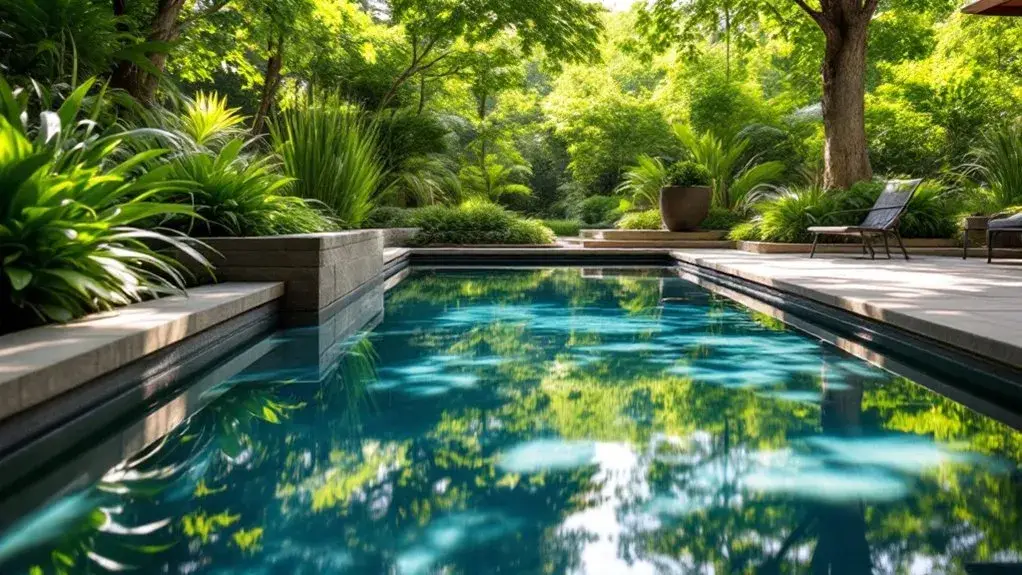
Beyond implementing safety measures, your pool landscaping requires ongoing care to preserve both its beauty and functionality.
You’ll need different maintenance approaches for hardscape and softscape elements. Clean stone surfaces regularly to prevent algae buildup and remove debris from crevices. Seal pavers annually to protect against chlorine damage and weather exposure.
For plants, choose drought-tolerant varieties that won’t drop excessive leaves into your pool. Trim vegetation regularly to maintain clearance from pool equipment and prevent root damage to hardscape structures.
Schedule seasonal deep cleaning for both elements, and inspect drainage systems to guarantee proper water flow away from your pool area.
Seasonal Design Strategies for Year-Round Appeal
While maintenance keeps your pool area functional, strategic seasonal planning transforms it into a dynamic landscape that captivates year-round.
You’ll create visual interest by incorporating elements that shine in different seasons while maintaining your softscape-hardscape balance.
3 Key Seasonal Design Strategies:
- Plant for succession blooming – Select perennials and shrubs that flower at different times, ensuring continuous color from spring through fall around your hardscape features.
- Add seasonal containers – Use portable planters to introduce seasonal elements like evergreens in winter or bright annuals in summer.
- Install lighting changes – Adjust outdoor lighting seasonally to highlight different landscape features and extend usability.
Frequently Asked Questions
What's the Typical Budget Breakdown Between Hardscape and Softscape Pool Elements?
You’ll typically allocate 60-70% of your pool landscaping budget to hardscape elements like decking, patios, retaining walls, and walkways.
Softscape features—plants, trees, mulch, and soil—usually account for 30-40% of costs.
However, you can adjust this ratio based on your priorities.
If you’re installing extensive stonework or premium materials, hardscape costs will increase.
Conversely, if you’re creating lush garden areas with mature plants, you’ll spend more on softscape elements.
How Long Does Installation Take for a Complete Hardscape and Softscape Pool Design?
You’ll typically need 2-4 weeks for complete installation, depending on your project’s complexity.
Hardscape elements like decking, retaining walls, and patios require 1-2 weeks, while softscape installation takes another 1-2 weeks for planting, irrigation setup, and soil preparation.
Weather conditions can extend timelines, and you’ll want to coordinate both phases carefully.
Larger properties with extensive features might need 6-8 weeks total.
Your contractor should provide a detailed timeline during the planning phase.
Do I Need Permits for Adding Hardscape Features Around My Pool?
You’ll likely need permits for significant hardscape additions, such as retaining walls, pergolas, gazebos, or extensive paving around your pool.
Simple features like decorative stones or small planters typically don’t require permits.
Check with your local building department since requirements vary by location and project scope.
They’ll determine what’s needed based on your specific plans.
It’s better to verify upfront than face potential fines or removal requirements later.
Can Existing Pool Areas Be Retrofitted With New Hardscape and Softscape?
Yes, you can absolutely retrofit existing pool areas with new hardscape and softscape elements.
You’ll need to assess your current space, drainage, and access points first. Most existing decking, patios, and landscaping can be updated or replaced with modern materials like natural stone, pavers, or decorative concrete.
You can also add new plantings, water features, or outdoor kitchens.
It’s often more cost-effective than complete reconstruction while dramatically improving your pool area’s functionality and appearance.
Which Design Elements Add the Most Value to My Property?
You’ll see the most significant property value boost from high-quality outdoor kitchens, fire features, and professional lighting systems.
These elements create functional entertainment spaces that buyers love. Well-designed patios made with premium materials, such as natural stone, also deliver strong returns.
Don’t overlook mature landscaping—it’s often undervalued but adds instant appeal and perceived value.
Smart irrigation systems and low-maintenance plantings demonstrate long-term cost savings that savvy buyers recognize and appreciate.
Conclusion
You’ve learned the essentials of balancing hardscape and softscape around your pool area. By carefully planning your layout, selecting durable materials, choosing pool-friendly plants, and creating smooth changes, you’ll achieve a harmonious design that’s both beautiful and functional. Remember to prioritize safety, stay on top of maintenance, and adapt your landscape seasonally. With these strategies, you’ll create an outdoor oasis that enhances your pool experience year-round.