
Retaining walls transform unusable sloped terrain into multiple functional levels, dramatically increasing your property’s usable square footage. They create stable, flat areas for patios, gardens, walkways, and outdoor living spaces that wouldn’t otherwise exist on steep slopes. By strategically terracing your lot with gravity, cantilever, or segmental wall systems, you’ll eliminate wasted triangular spaces and gain distinct zones for different activities. Proper engineering and drainage guarantee these new areas remain stable and functional for decades, maximizing your investment’s potential.
Key Takeaways
- Retaining walls create flat, functional terraces from steep slopes, transforming unusable triangular spaces into buildable lots and outdoor living areas.
- Strategic terracing establishes distinct zones for activities such as patios, gardens, and walkways, maximizing the property’s functional potential.
- Proper foundation design on retained flat surfaces eliminates costly excavation challenges and provides stable ground for construction projects.
- Anchored wall systems maximize space efficiency by requiring minimal footprint while supporting tall installations on steep terrain.
- Effective drainage integration prevents erosion and water damage while preserving usable space created by the retaining wall system.
Understanding the Challenges of Building on Sloped Terrain
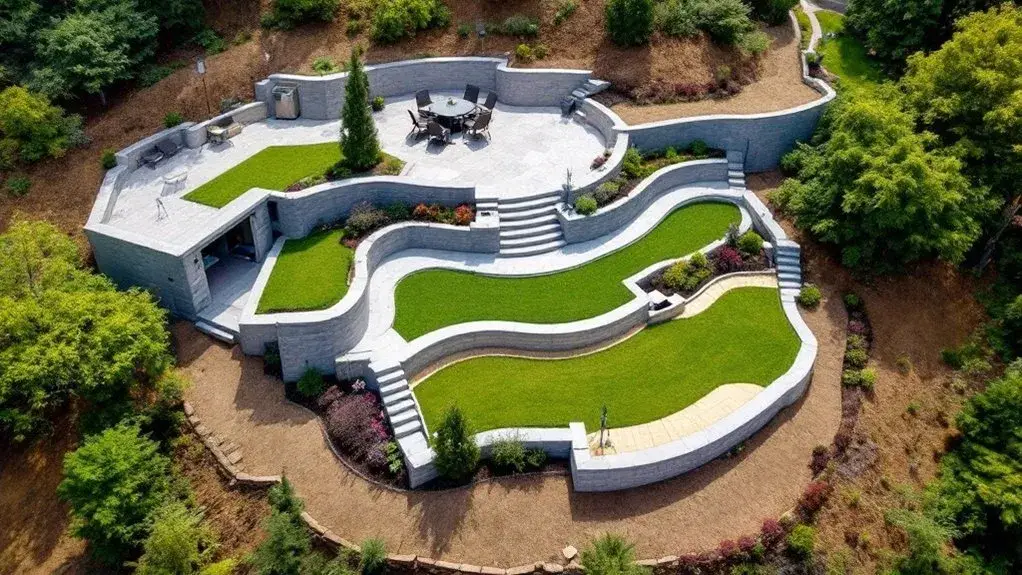
When you’re faced with a sloped lot, you’ll quickly discover that traditional construction methods don’t translate seamlessly to angled terrain.
You can’t simply pour a foundation on uneven ground or create outdoor living spaces that feel balanced and functional. Water runoff becomes a constant concern, potentially causing erosion and drainage issues that threaten your property’s stability.
You’ll find that standard excavation costs skyrocket as contractors work against gravity and difficult access points. Without proper planning, you’re left with unusable triangular spaces, unsafe steep walkways, and limited options for landscaping or outdoor entertainment areas.
Types of Retaining Wall Systems for Maximum Space Utilization
The solution lies in selecting the right retaining wall system that transforms your challenging slope into valuable, level space.
Gravity walls use their mass to resist soil pressure, making them ideal for shorter heights.
Cantilever walls use reinforced concrete with a footing that extends into the retained soil, making them ideal for medium heights.
Anchored walls use cables or rods extending into stable soil behind the wall, maximizing space efficiency for tall installations.
Segmental retaining walls offer flexibility with interlocking blocks, allowing them to adapt to curves and varying heights.
Each system’s design directly impacts how much usable area you’ll gain from your sloped terrain.
Engineering Considerations for Safe and Effective Slope Management
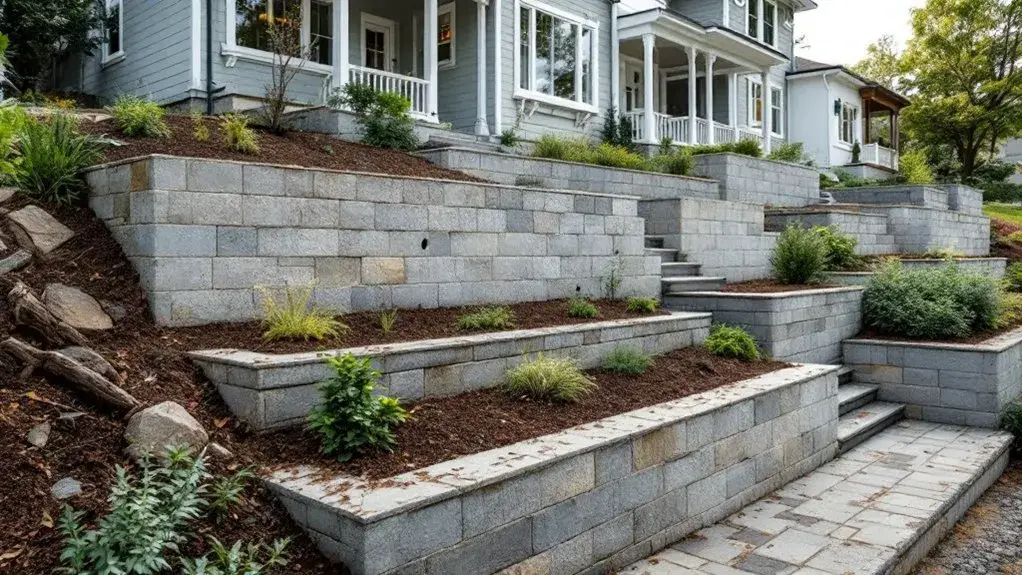
Before you break ground on any retaining wall project, you’ll need to understand the critical engineering factors that determine both safety and effectiveness.
Soil analysis comes first—you must identify soil type, drainage patterns, and load-bearing capacity.
Calculate lateral earth pressure, which increases with wall height and soil density. Factor in surcharge loads from structures, vehicles, or stored materials above your wall.
Proper drainage design prevents hydrostatic pressure buildup that can cause wall failure.
Consider frost depth requirements and seismic conditions in your area.
Finally, guarantee adequate foundation depth and width to resist overturning and sliding forces safely.
Creating Multiple Usable Levels Through Strategic Terracing
Strategic terracing transforms steep, unusable slopes into multiple functional outdoor spaces that maximize your property’s potential.
You’ll create distinct zones for different activities—perhaps a dining patio on the upper level, a play area in the middle, and a garden space below. Each terrace becomes an independent outdoor room with its own character and purpose.
Plan your levels based on natural slope breaks and intended functions. Consider sight lines between terraces, ensuring privacy where needed while maintaining visual connection.
You’ll need proper drainage between levels and adequate width for furniture and movement. Strategic placement creates seamless flow throughout your newly expanded outdoor living space.
Design Strategies That Transform Steep Slopes Into Functional Areas
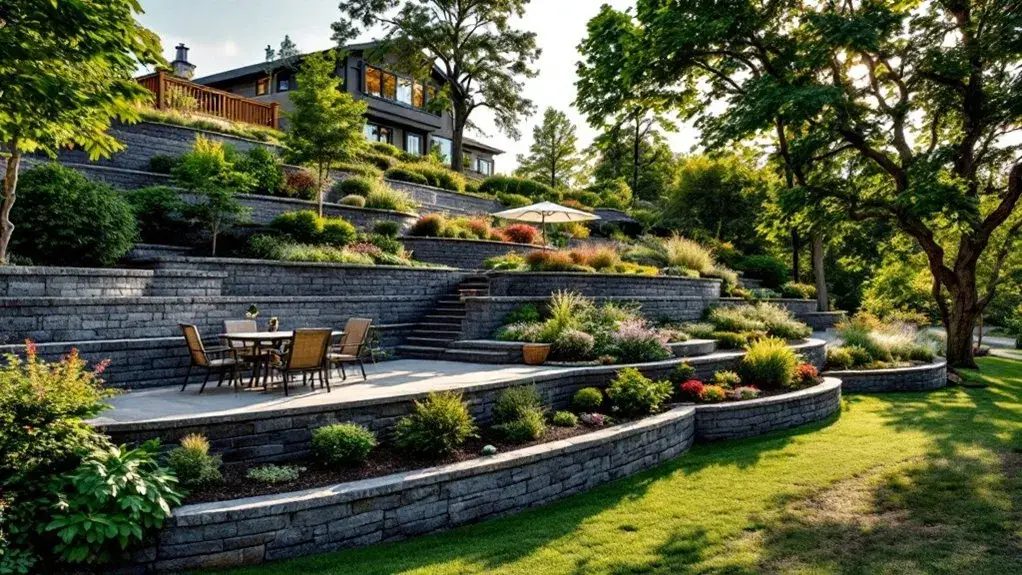
Successful slope transformation begins with reading your land’s natural contours and working with them rather than against them.
You’ll create more functional space by identifying natural break points where terraces feel organic. Consider drainage patterns when positioning walls—they’ll guide water flow while defining usable zones.
Your design should integrate multiple levels seamlessly:
- Curved retaining walls that follow natural slope lines create softer shifts between levels
- Stepped seating walls serve dual purposes as both structure and outdoor furniture
- Pocket gardens between terraced levels add visual interest while preventing erosion
Each functional area should connect logically to maximize your slope’s potential.
Material Selection Impact on Space Optimization and Aesthetics
When you choose materials for your retaining walls, you’re making decisions that’ll shape both function and beauty for decades.
Concrete blocks offer maximum space efficiency with their uniform dimensions and stackable design. Natural stone creates organic curves that follow your slope’s contours while adding timeless appeal.
Timber walls provide warmth but require more maintenance in wet climates. Steel and aluminum deliver sleek, modern aesthetics with minimal thickness, maximizing your usable area.
Consider drainage requirements – some materials handle water better than others. Your material choice directly affects construction costs, maintenance needs, and how seamlessly the wall integrates with your landscape design.
Drainage Solutions That Protect Your Investment and Maximize Longevity
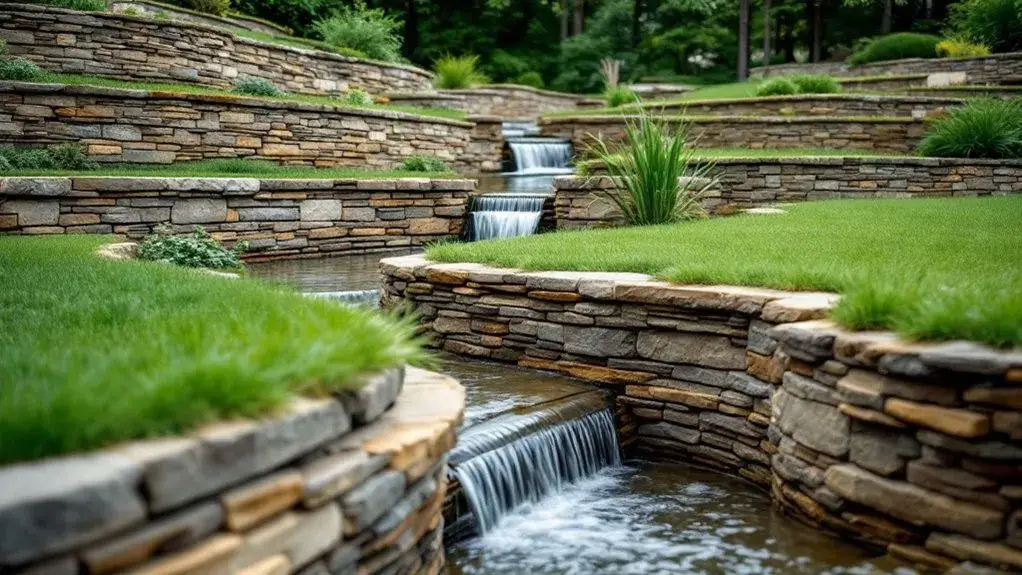
Proper drainage systems form the backbone of any retaining wall project, determining whether your structure stands strong for decades or fails within years.
Water buildup behind your wall creates hydrostatic pressure that’ll push against the structure, leading to cracks, bulging, or complete failure.
You’ll need multiple drainage components working together:
- French drains behind the wall to collect and redirect groundwater away from the structure
- Weep holes spaced throughout the wall face to allow water to escape and pressure relief
- Proper backfill materials like gravel that promote drainage rather than water retention
Smart drainage planning protects your investment.
Cost-Benefit Analysis of Retaining Wall Projects for Property Value Enhancement
Although retaining walls require significant upfront investment, they consistently deliver strong returns through increased property values and expanded usable space.
You’ll typically see 70-80% of your investment returned through immediate property value increases. The additional usable square footage you gain commands premium pricing in your local market, often exceeding $50-100 per square foot in desirable areas.
You’re also preventing costly erosion damage that could devastate your property’s foundation and landscaping.
When you factor in reduced maintenance costs, enhanced curb appeal, and long-term structural protection, retaining walls prove financially sound investments that pay dividends for decades.
Frequently Asked Questions
Do I Need Permits Before Installing Retaining Walls on My Property?
You’ll likely need permits for retaining walls, especially if they’re over 3-4 feet tall or support significant weight.
Requirements vary by location, so check with your local building department first. Even shorter walls might need permits if they’re near property lines or affect drainage.
Don’t skip this step – unpermitted walls can cause costly problems later. Contact your city or county office to understand specific regulations and application processes before you start construction.
How Long Does a Typical Retaining Wall Construction Project Take?
Your retaining wall project timeline depends on several factors.
Small DIY walls under 3 feet typically take 2-5 days to complete.
Larger engineered walls can take 1-3 weeks, including excavation and proper drainage installation.
You’ll need additional time for permit approval, which adds 2-6 weeks beforehand.
Weather conditions, soil type, and wall complexity also affect duration.
Professional contractors often work faster than DIY approaches, completing most residential projects within 5-10 business days.
Can I Build Retaining Walls Myself, or Must I Hire Professionals?
You can build small retaining walls yourself if they’re under 3-4 feet tall and don’t retain significant soil loads.
However, you’ll need permits, proper drainage planning, and engineering expertise to ensure structural integrity.
Taller walls or those supporting heavy loads require the services of professional engineers and contractors due to safety regulations and technical complexity.
DIY projects work for bare garden walls, but don’t risk structural failure with larger installations that could cause property damage.
What Is the Maximum Height for Retaining Walls Without Special Engineering?
You can typically build retaining walls up to 4 feet tall without requiring special engineering permits in most areas.
However, local building codes vary considerably, so you’ll need to check with your municipality first.
Walls exceeding this height usually need professional structural engineering due to increased soil pressure and safety concerns.
Even shorter walls may require permits depending on their location, soil conditions, and proximity to property lines or structures.
How Do Retaining Walls Affect Property Insurance Rates and Coverage?
Your retaining walls can affect your property insurance rates, though the impact varies by insurer.
You’ll likely see minimal rate changes for standard walls under 4 feet, but taller structures may increase premiums since they’re considered liability risks.
You should notify your insurance company about new retaining walls to guarantee proper coverage.
If your wall fails and causes property damage, you’ll want confirmation that it’s covered under your homeowner’s policy before construction begins.
Conclusion
You’ll transform your sloped property into valuable, functional space through strategic retaining wall implementation. By selecting appropriate materials, incorporating proper drainage, and designing terraced levels, you’re creating usable areas that would otherwise remain unusable. The engineering investment pays dividends in the form of increased property value and expanded living space. Don’t let steep terrain limit your property’s potential—retaining walls reveal your lot’s hidden possibilities while providing safe, attractive solutions.