
Custom pool construction in Oklahoma City’s metro requires specialized design for extreme weather conditions, including scorching summers exceeding 95°F and freeze-thaw winter cycles. You’ll need reinforced concrete shells, aggregate finishes, and robust drainage systems to handle thunderstorms and clay soil expansion. Popular options include geometric and freeform designs with innovative technology features like variable-speed pumps and automated systems. Local contractors understand regional permits and soil conditions, ensuring your investment withstands Oklahoma’s demanding climate while perfectly complementing your lifestyle and discovering ideal solutions.
Key Takeaways
- Custom pools in the OKC metro accommodate extreme weather with reinforced materials, robust filtration, and professional winterization for year-round durability.
- Choose from geometric, freeform, or infinity designs with spa integration to match your home’s architecture and lifestyle preferences.
- Innovative technology enables remote control of temperature, lighting, and cleaning while variable-speed pumps reduce energy costs by 90%.
- Local contractors understand Oklahoma’s clay soil, weather patterns, and permits, ensuring proper construction for regional conditions.
- Saltwater systems and automated features minimize maintenance while providing gentler swimming experiences for busy lifestyles.
Understanding Oklahoma City’s Climate Considerations for Pool Design
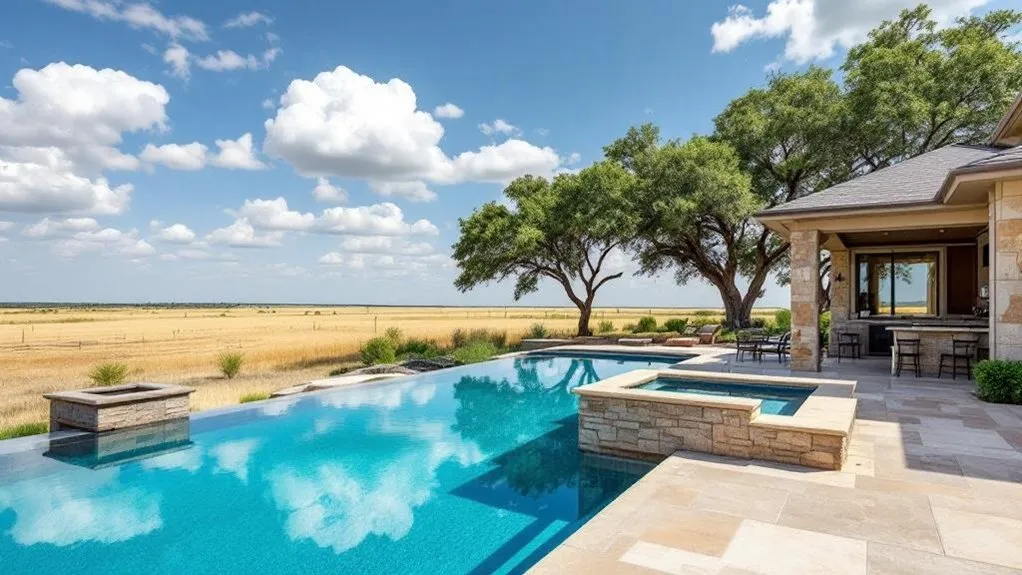
When designing your custom pool in Oklahoma City, you’ll need to account for the region’s distinct continental climate that brings scorching summers, unpredictable spring storms, and occasional freezing winters.
Summer temperatures regularly exceed 95°F, making pools essential for relief but requiring robust filtration systems to handle increased usage and evaporation. You’ll want proper drainage solutions for Oklahoma’s notorious thunderstorms and hail protection for equipment.
Winter freeze-thaw cycles demand quality construction materials and professional winterization procedures. Consider wind-resistant features since Oklahoma’s open plains generate strong gusts.
Intelligent climate-conscious design guarantees your pool withstands these challenging weather patterns year-round.
Popular Pool Styles and Features for Metro Area Homes
Oklahoma City homeowners embrace pool designs that complement both their architectural preferences and the region’s unique landscape. You’ll find geometric pools dominate the metro area, offering clean lines that match contemporary homes. Natural-style pools with rock features blend beautifully with Oklahoma’s terrain.
| Pool Style | Key Features |
|---|---|
| Geometric | Clean lines, rectangular shapes |
| Freeform | Curved edges, natural appearance |
| Infinity | Vanishing edge, stunning views |
| Spa Integration | Hot tub connected to the main pool |
| Saltwater Systems | Gentler on skin, lower maintenance |
Water features like fountains and LED lighting systems enhance your pool’s appeal while extending evening entertainment possibilities.
Smart Technology and Energy-Efficient Pool Systems
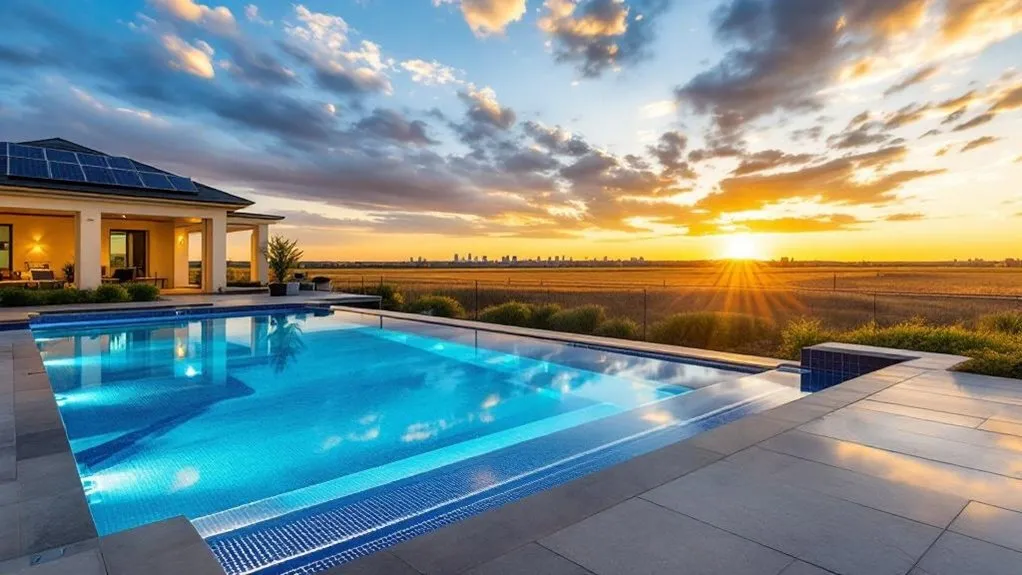
As technology transforms home automation, pool systems in Oklahoma City are becoming more innovative and more efficient than ever before.
You can now control your pool‘s temperature, lighting, and filtration remotely through smartphone apps. Variable-speed pumps reduce energy consumption by up to 90% compared to traditional single-speed models, significantly lowering your utility bills.
LED lighting systems consume less power while providing customizable color options for evening entertainment. Automated cleaning systems maintain water quality without manual intervention.
Salt water chlorination systems offer gentler water treatment, reducing chemical costs and skin irritation while providing consistent sanitization for your family’s enjoyment.
Choosing the Right Materials for Oklahoma Weather Conditions
Building an innovative, energy-efficient pool system means nothing if you don’t select materials that can withstand Oklahoma’s extreme weather patterns.
You’ll face scorching summers, sudden hailstorms, and freezing winters that can crack inferior surfaces.
Choose materials designed for Oklahoma’s climate challenges:
- Aggregate finishes – Resist thermal expansion and provide superior durability against temperature fluctuations
- Reinforced concrete shells – Handle freeze-thaw cycles better than standard construction
- UV-resistant coping stones – Won’t fade or deteriorate under intense summer sun
- Flexible plumbing systems – Accommodate ground movement from clay soil expansion
Brilliant material selection protects your investment and guarantees decades of reliable performance.
Working With Local Pool Contractors: What to Expect During Construction
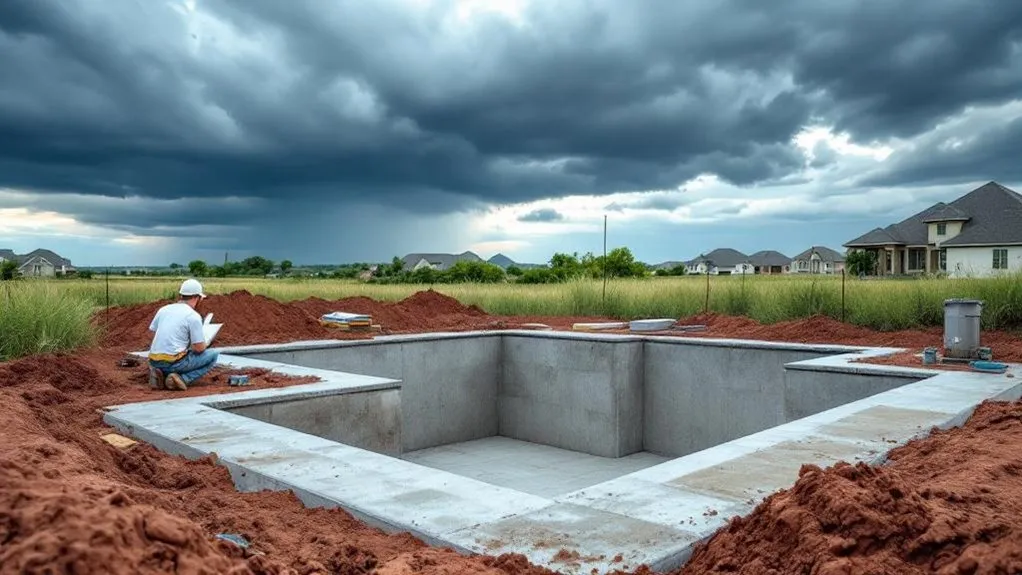
When you’ve selected the right materials for your pool project, finding experienced local contractors becomes your next critical step. Oklahoma City contractors understand regional soil conditions, weather patterns, and permitting requirements that affect construction timelines.
| Construction Phase | Duration | Key Activities |
|---|---|---|
| Excavation & Permits | 1-2 weeks | Digging, utility marking, and inspections |
| Plumbing & Electrical | 1 week | Installing systems, rough-in work |
| Structure & Finishing | 2-3 weeks | Gunite/concrete, tile, coping installation |
Expect regular communication about weather delays, especially during Oklahoma’s unpredictable spring and summer storms. Quality contractors provide detailed schedules, handle inspections, and coordinate utility connections efficiently throughout your project.
Frequently Asked Questions
What Permits Are Required for Pool Construction in the Oklahoma City Metro?
You’ll need several permits for pool construction, starting with a building permit from your local municipality.
Most areas require electrical permits for lighting and pump systems, plus plumbing permits for water lines and drainage.
You’ll also need setback approvals, ensuring proper distance from property lines and structures.
Some neighborhoods require HOA approval, too.
It’s best to check with your specific city’s building department since requirements can vary between Oklahoma City, Edmond, Norman, and surrounding communities.
How Much Does a Custom Pool Typically Cost in the OKC Area?
You’ll typically spend $30,000 to $80,000 for a custom pool in the OKC area, though luxury features can push costs higher.
Your final price depends on size, materials, and add-ons like waterfalls or heating systems.
Basic gunite pools start around $25,000, while elaborate designs with premium finishes can exceed $100,000.
Don’t forget to budget an extra 10-20% for unexpected expenses during construction.
What Is the Average Timeline for Completing a Custom Pool Project?
You’ll typically see your custom pool project completed in 8-12 weeks from start to finish.
However, your timeline can vary based on several factors. Weather delays, especially during Oklahoma’s unpredictable seasons, can extend construction.
Complex designs with custom features like waterfalls or spas add 2-4 weeks.
Permit approval usually takes 1-2 weeks upfront.
You’ll want to plan for potential delays and discuss realistic expectations with your contractor before starting.
Do I Need to Upgrade My Electrical System for Pool Installation?
You’ll likely need electrical upgrades for your pool installation.
Most pools require dedicated 220V circuits for pumps, heaters, and lighting systems. Your existing electrical panel might need expansion to handle the additional load safely.
You’ll also need GFCI protection and proper grounding around the pool area per safety codes. An electrician should evaluate your current system’s capacity before installation begins.
These electrical improvements typically add $1,500-$3,000 to your project costs.
What Ongoing Maintenance Costs Should I Budget for My New Pool?
You’ll need to budget $1,200-$2,400 annually for ongoing pool maintenance. This includes chemicals ($300-600), equipment repairs and replacements ($400-800), professional cleaning services ($300-600), and utilities like increased electricity for pumps and heating ($200-400).
You can reduce costs by learning basic maintenance tasks yourself, but you’ll still need professional inspections and major repairs.
Set aside monthly funds to cover seasonal opening/closing, filter replacements, and unexpected equipment breakdowns.