
You can transform your property’s challenging slopes with modern retaining walls that serve as stunning architectural features. Steel and glass systems offer sleek transparency, while natural stone provides timeless beauty that harmonizes with organic landscapes. Modular blocks enable DIY-friendly installation, and terraced planting walls create productive garden spaces. Hybrid materials, such as weathering steel combined with reclaimed timber or concrete featuring living moss panels, deliver unique statements that blend industrial and natural elements for maximum visual impact and functionality.
Key Takeaways
- Steel and glass systems combine structural strength with visual transparency for modern minimalist designs.
- Natural stone walls provide timeless beauty while integrating seamlessly with organic landscape features.
- Modular interlocking blocks offer DIY-friendly installation with built-in drainage and alignment guides.
- Terraced planting walls transform slopes into functional garden spaces with integrated irrigation systems.
- Hybrid materials like steel mesh with recycled glass create unique architectural statements.
Contemporary Steel and Glass Retaining Wall Systems
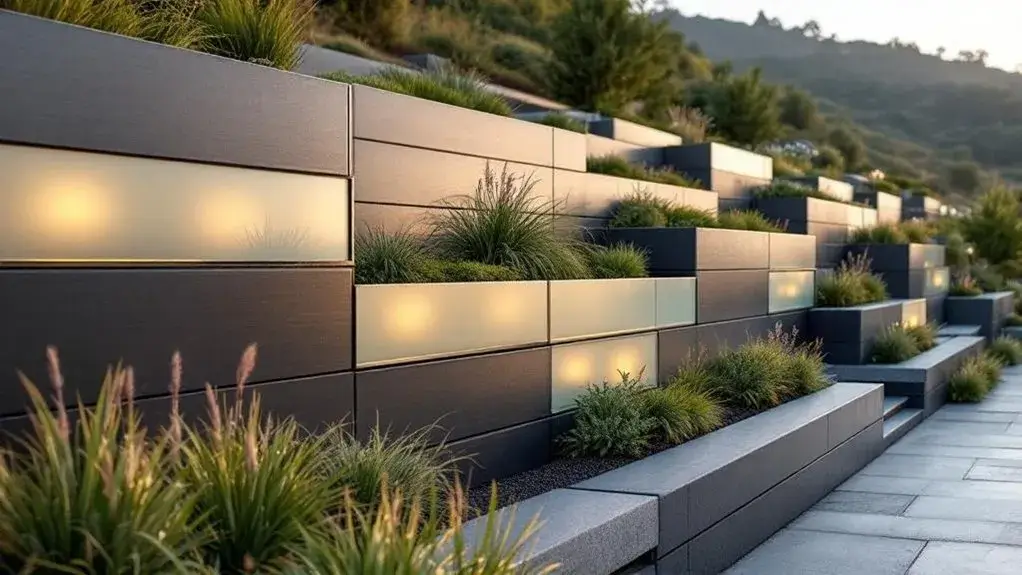
Contemporary steel and glass retaining wall systems revolutionize traditional landscape architecture by combining structural strength with visual transparency.
You’ll find these systems create stunning focal points while maintaining essential soil retention functions. The steel framework provides exceptional durability and can withstand significant lateral pressure, while tempered glass panels offer unobstructed views of your landscape beyond.
You can customize these walls with various steel finishes, including weathering steel that develops attractive patina over time.
Installation requires professional expertise, but you’ll gain a sophisticated barrier that doesn’t obstruct sightlines. These systems work particularly well in modern, minimalist garden designs where clean lines matter.
Natural Stone Walls for Timeless Landscape Integration
While steel and glass systems offer striking modern appeal, natural stone walls provide enduring beauty that harmonizes effortlessly with organic landscapes.
You’ll find fieldstone, limestone, and granite create structures that age gracefully, developing character through weathering. These walls integrate seamlessly with existing terrain, supporting plantings that soften harsh edges.
You can choose from dry-stacked construction for rustic charm or mortared joints for formal applications. Natural stone’s thermal mass helps regulate soil temperature, benefiting root systems.
Whether you’re creating terraced gardens or managing steep slopes, stone walls deliver both structural integrity and timeless aesthetic appeal that complements any architectural style.
Modular Block Designs for DIY-Friendly Installation
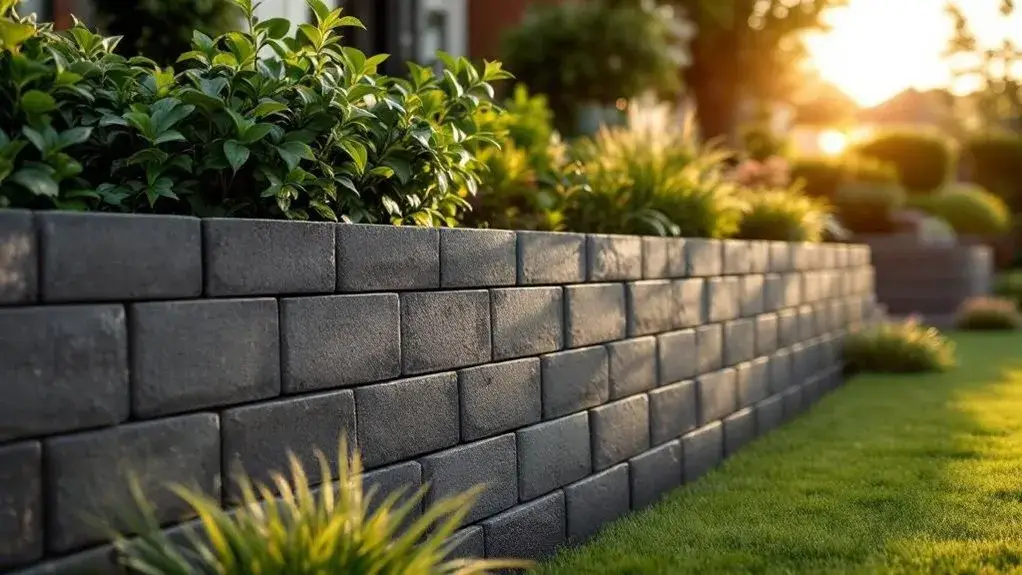
Since you’re looking for a balance between modern aesthetics and practical installation, modular block systems deliver engineered precision with user-friendly construction methods.
These interlocking units snap together without mortar, featuring built-in alignment guides and weight distribution channels. You’ll appreciate their consistent dimensions and automated leveling systems that eliminate guesswork during construction.
Most modular blocks include integrated drainage solutions and geogrid compatibility for enhanced structural integrity.
Their standardized connections allow you to complete installations faster than traditional methods while maintaining professional results.
You can choose from concrete, composite, or natural stone-faced options that complement contemporary landscape designs perfectly.
Terraced Planting Walls That Double as Garden Features
Beyond structural functionality, today’s retaining walls serve as living architectural elements that transform steep slopes into productive garden spaces. You’ll create stunning visual impact by incorporating built-in planters that cascade down multiple levels. These terraced designs maximize growing space while providing excellent drainage and soil retention.
| Plant Type | Ideal Wall Height |
|---|---|
| Herbs | 12-18 inches |
| Perennials | 18-30 inches |
| Small Shrubs | 30-48 inches |
| Ornamental Grasses | 24-36 inches |
| Ground Cover | 8-15 inches |
You can integrate irrigation systems directly into the wall structure, ensuring consistent moisture levels. Strategic plant placement creates year-round interest through seasonal color changes and varied textures.
Hybrid Materials Creating Unique Architectural Statements
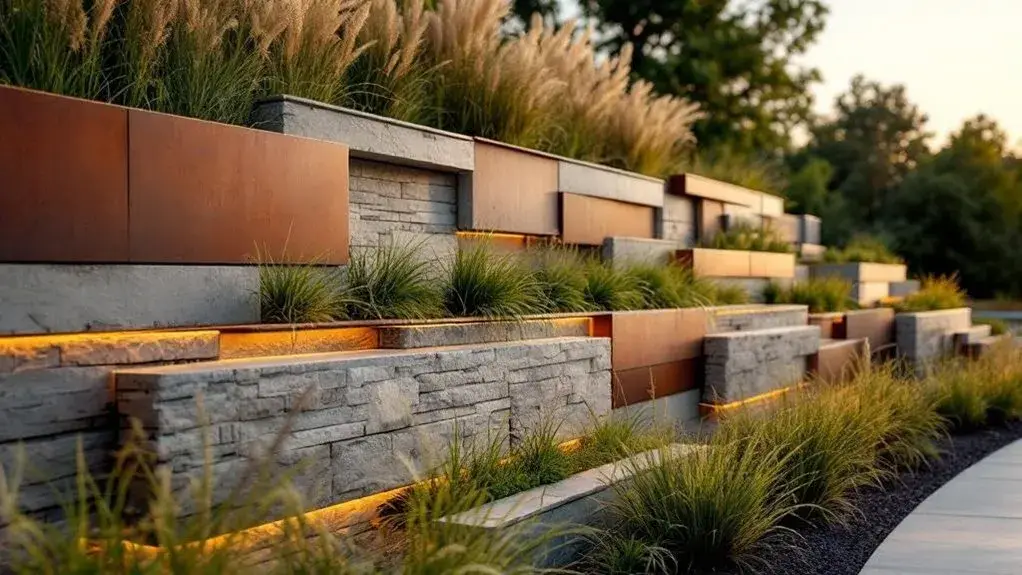
As contemporary designers push creative boundaries, you’ll discover retaining walls that blend unexpected materials into striking architectural statements.
Steel mesh panels filled with colorful recycled glass create luminous barriers that glow at sunset. Weathering steel combined with reclaimed timber produces industrial-rustic contrasts perfect for modern landscapes.
You can incorporate perforated metal screens with natural stone bases for sophisticated texture play. Concrete blocks interwoven with living moss panels offer sustainable beauty that evolves seasonally.
These hybrid approaches let you achieve distinctive focal points while maintaining structural integrity, transforming necessary retaining structures into conversation-worthy design elements that elevate your property’s architectural character.
Frequently Asked Questions
What Permits Are Required for Retaining Wall Construction in Residential Areas?
You’ll typically need a building permit for retaining walls over 4 feet tall, though some municipalities require permits for walls as low as 2-3 feet.
You should check with your local building department since requirements vary by location.
You’ll also need to call 811 before digging to locate underground utilities.
Some areas require structural engineer approval for taller walls.
Don’t forget to verify property line setbacks and HOA restrictions before you start construction.
How Much Does Professional Retaining Wall Installation Typically Cost per Square Foot?
You’ll typically pay $15-40 per square foot for professional retaining wall installation, though costs vary considerably based on materials and complexity.
Basic concrete block walls run $15-25 per square foot, while natural stone or engineered systems cost $25-40+.
You’re looking at higher prices for walls over 4 feet tall, steep slopes, or poor soil conditions.
Don’t forget to factor in excavation, drainage, and potential permit fees when budgeting for your project.
What Drainage Systems Prevent Water Damage Behind Modern Retaining Walls?
You’ll need proper drainage to protect your retaining wall from water damage.
Install French drains with perforated pipes behind the wall to collect groundwater.
Add gravel backfill for drainage and weep holes every 6-8 feet to release trapped water.
Don’t forget waterproof membranes on the wall’s back face.
Surface drainage systems like gutters and downspout extensions also prevent water from pooling near your wall’s foundation area.
How Deep Should Retaining Wall Foundations Be for Different Soil Types?
You’ll need different foundation depths based on your soil conditions.
For stable clay or rocky soil, dig foundations one-third the wall’s height.
In sandy or loose soil, you’ll want deeper foundations—up to half the wall’s height.
If you’re dealing with expansive clay, consider going even deeper and adding proper drainage.
Always check local building codes, as they’ll specify minimum depths.
When in doubt, consult a structural engineer for soil-specific recommendations.
What Maintenance Schedule Keeps Retaining Walls Structurally Sound Over Time?
You’ll need to inspect your retaining wall twice yearly, checking for cracks, drainage issues, and soil erosion.
Clean weep holes and drainage systems annually to prevent water buildup.
Remove vegetation growing on or near the wall that could damage the structure.
Repoint mortar joints every 3-5 years if needed.
Address minor repairs immediately before they become major problems.
Power wash surfaces annually to remove debris and check for structural changes that require professional attention.