
You can transform your landscape with stunning retaining wall options that blend function and beauty. Natural stone lends a rustic charm, while modern concrete block systems provide engineered strength with customizable finishes. Timber walls provide warmth and design flexibility, and gabion wire baskets combine industrial appeal with excellent drainage. Curved boulder structures follow the natural contours of your property, creating organic boundaries. Mixed materials add visual interest and sophisticated appeal that’ll elevate your outdoor space beyond expectations.
Key Takeaways
- Natural stone walls, crafted from fieldstone or limestone, exude a rustic charm while offering excellent drainage through mortarless, stacked construction.
- Interlocking concrete block systems offer engineered strength with customizable colors and finishes, enabling seamless installation without the need for mortar.
- Timber and wood plank walls provide natural warmth with flexible design options, including horizontal, vertical, or diagonal planking arrangements.
- Gabion wire basket designs combine industrial aesthetics with functional drainage, utilizing stone-filled mesh cages for enhanced visual appeal.
- Curved boulder structures create organic boundaries that naturally follow property contours and blend seamlessly with existing terrain.
Natural Stone Terraced Gardens
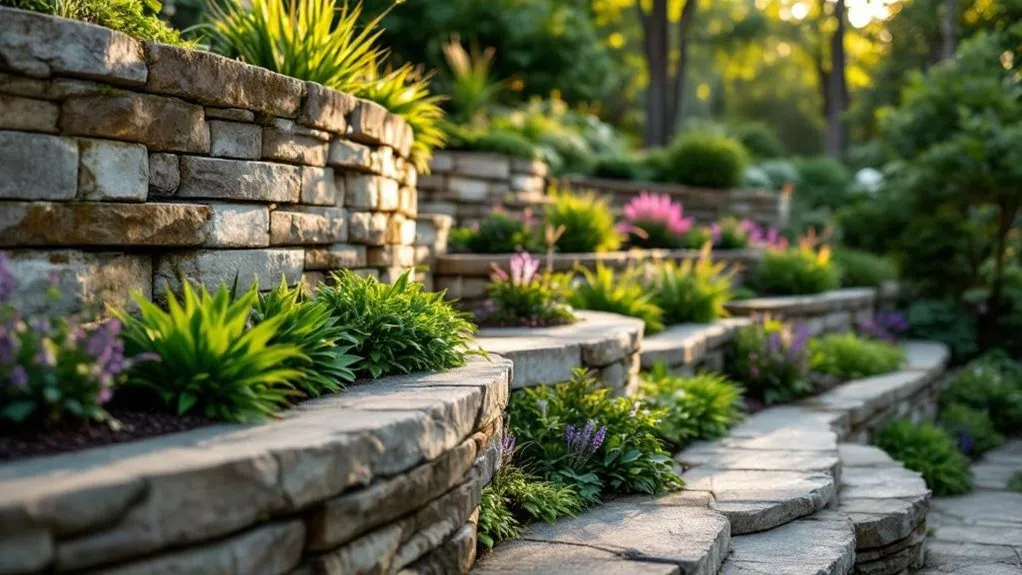
When you’re dealing with sloped terrain, natural stone terraced gardens offer both practical erosion control and stunning visual appeal.
You’ll create multiple planting levels that showcase different plants while managing water runoff effectively. Choose fieldstone, limestone, or sandstone that complements your home’s architecture.
Stack stones without mortar for better drainage and a rustic look, ensuring each level slopes slightly backward. Plant cascading flowers, herbs, or vegetables on each terrace.
You’ll transform challenging slopes into functional garden spaces that add dimension and character to your landscape while preventing soil erosion naturally.
Modern Concrete Block Systems
Today’s concrete block retaining wall systems deliver engineered strength with surprisingly attractive designs that’ll transform your landscape project.
You’ll find interlocking blocks that create a seamless installation without mortar, while textured faces mimic the look of natural stone or brick.
These systems handle significant soil pressure through gravity and reinforcement options, such as geogrid.
You can choose from split-face finishes, smooth surfaces, or weathered textures in a variety of colors.
Stack them easily with built-in alignment features, and add caps for polished edges.
They’re cost-effective compared to poured concrete, require minimal maintenance, and offer modular flexibility for curves, corners, and multi-level designs.
Timber and Wood Plank Walls
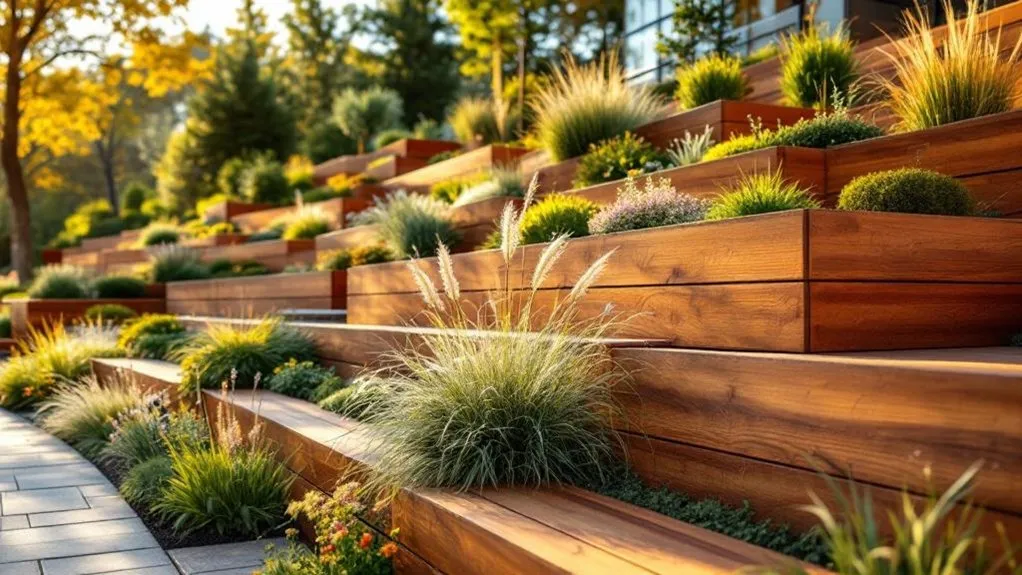
Because timber retaining walls offer natural warmth and versatility that concrete can’t match, they’ve become a popular choice for homeowners seeking both function and aesthetic appeal.
You’ll find these wooden structures complement various landscape styles while providing reliable soil retention.
Consider these timber wall advantages:
- Cost-effective installation – You can build them with basic tools and skills
- Design flexibility – Horizontal, vertical, or diagonal planking creates different looks
- Natural integration – Wood blends seamlessly with existing vegetation and outdoor features
- Easy maintenance – Simple staining or sealing keeps them looking fresh
Choose pressure-treated lumber or naturally rot-resistant species like cedar for longevity.
Gabion Wire Basket Designs
While timber walls offer natural beauty, gabion wire basket designs provide a completely different approach, combining industrial strength with striking visual appeal.
You’ll fill wire mesh cages with stones, creating sturdy barriers that handle heavy soil loads effortlessly.
Select from various stone types, including limestone, granite, or recycled concrete, to match your aesthetic preferences.
You can stack multiple basket levels for taller walls or create curved designs that follow the natural contours of your landscape.
Gabion walls also provide excellent drainage, preventing water from building up behind the structure.
They’re cost-effective, low-maintenance, and develop attractive moss growth over time.
Curved Boulder Retaining Structures
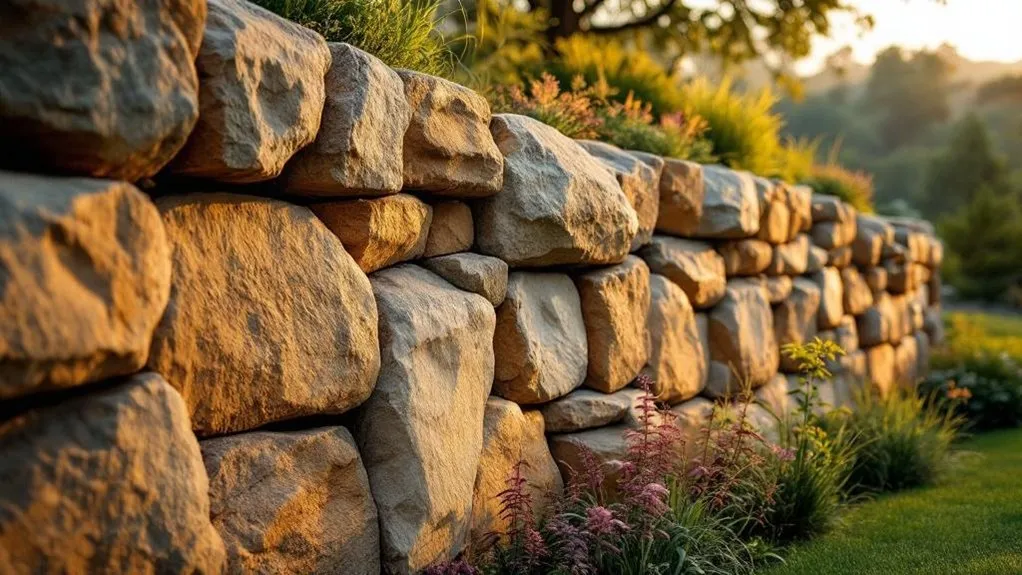
Moving beyond structured wire baskets, curved boulder retaining structures create organic boundaries that blend seamlessly with the natural terrain.
You’ll achieve stunning visual appeal while providing excellent structural support for sloped landscapes.
These natural stone walls offer distinctive advantages:
- Flexible design – You can curve walls to follow property contours
- Superior drainage – Gaps between boulders allow water flow through
- Minimal maintenance – Stone weathers naturally without deterioration
- Cost efficiency – Local quarries often provide affordable boulder options
You’ll need professional installation for proper foundation work and boulder placement.
Consider incorporating native plants between stones to enhance the organic aesthetic and prevent erosion.
Interlocking Brick Patterns
Anyone seeking precise geometric aesthetics will find interlocking brick patterns deliver both visual sophistication and structural integrity for retaining walls.
You’ll discover these systems snap together without mortar, creating seamless connections that distribute weight evenly across the structure.
Choose from running bond, herringbone, or basket weave patterns to match your landscape’s architectural style. You can select colors ranging from earth tones to bold statements, allowing customization that complements your home’s exterior.
Installation is straightforward since each brick is designed with built-in alignment features.
You’ll appreciate how these patterns create clean lines while providing excellent drainage and long-term stability for your property.
Living Green Retaining Walls
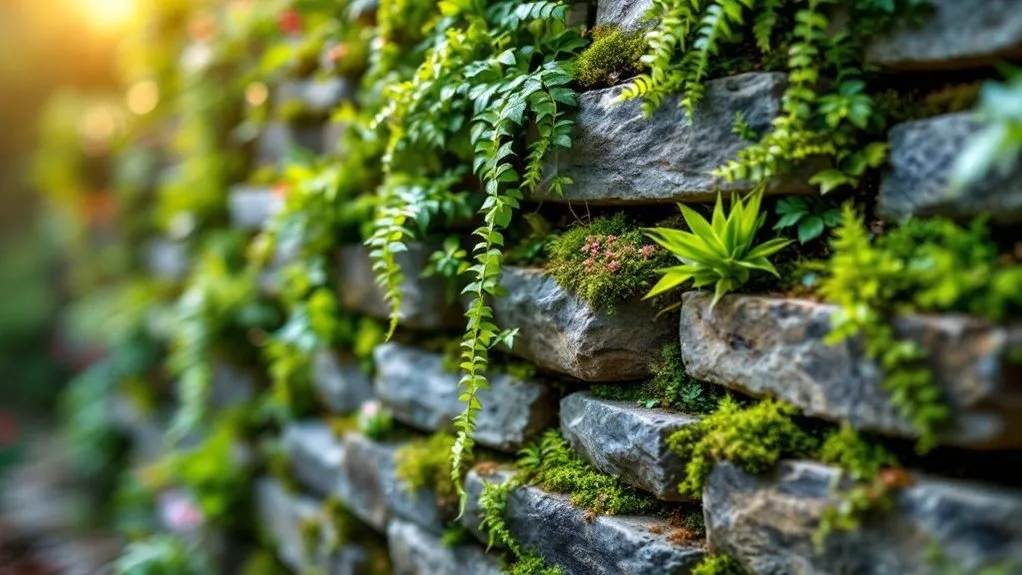
Beyond traditional masonry approaches, living green retaining walls transform functional structures into thriving ecosystems that blend seamlessly with your landscape.
You’ll create natural beauty while providing essential soil retention through integrated vegetation systems.
Consider these living wall approaches:
- Modular planting blocks – Stack concrete blocks with built-in planting pockets for herbs and flowers
- Terraced garden walls – Create stepped planting areas using timber or stone framework
- Gabion planters – Fill wire cages with rocks and soil for drought-resistant plants
- Living crib walls – Use timber frameworks filled with soil for larger shrubs and perennials
You’ll enjoy year-round visual interest while supporting local wildlife and improving air quality.
Stacked Flagstone Arrangements
When you’re seeking a retaining wall solution that combines rustic charm with exceptional durability, stacked flagstone arrangements deliver timeless appeal through their natural texture and organic color variations.
You’ll find these walls blend seamlessly with both formal and informal landscapes while providing excellent structural support.
Stack flagstones without mortar for a dry-stone appearance, or use mortar joints for added stability and strength. You can create varied patterns by alternating stone sizes and incorporating different flagstone colors.
The irregular edges and natural striations add visual interest that complements plantings beautifully. Select local flagstone varieties to ensure your wall blends seamlessly with your region’s natural aesthetic.
Decorative Block With Built-In Planters
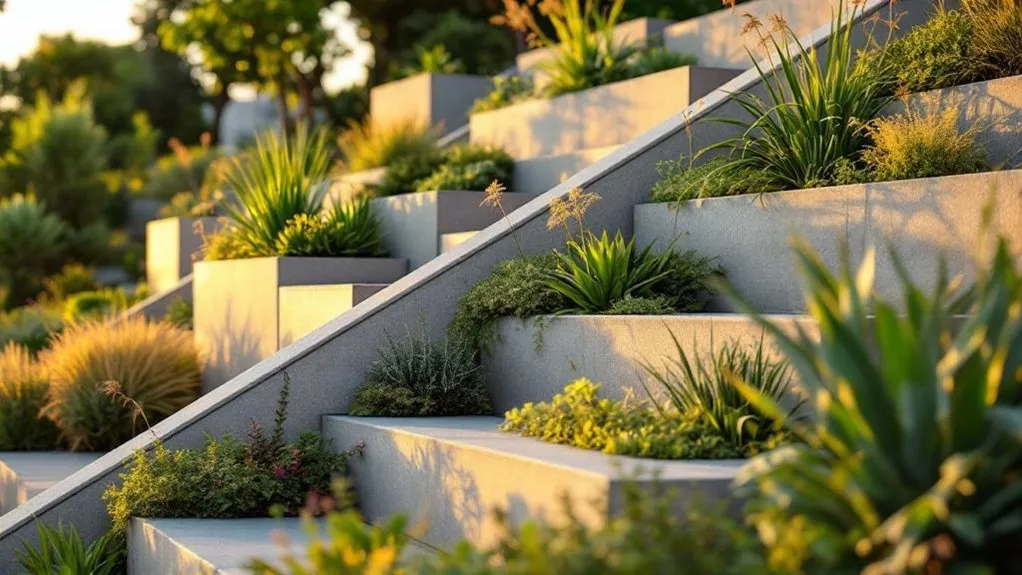
Modern decorative blocks with built-in planters transform your retaining wall into a living architectural feature that serves dual purposes.
You’ll create functional support while adding vibrant greenery to your landscape design.
These innovative blocks offer distinct advantages:
- Integrated drainage systems prevent water buildup and root rot
- Modular design allows flexible height and length configurations
- Built-in soil chambers eliminate separate planter installation
- Weather-resistant materials guarantee long-lasting performance
You can plant succulents, herbs, or cascading flowers directly into the block openings.
This approach maximizes your space efficiency while creating stunning visual interest that softens the wall’s hard edges.
Mixed Material Contemporary Designs
Several innovative approaches combine different materials to create retaining walls that make bold contemporary statements.
You’ll achieve striking visual contrast by pairing smooth concrete panels with rough natural stone sections. Consider alternating steel plates with wood planks for an industrial-organic fusion that’s particularly effective in modern landscapes.
Mix brick and metal accents to bridge traditional and contemporary styles seamlessly. Glass blocks integrated with concrete create dramatic light-filtering effects, especially when backlit.
You can also combine stucco surfaces with exposed aggregate sections for textural variety. These mixed-material designs let you customize your wall’s personality while maintaining structural integrity and visual sophistication.
Frequently Asked Questions
What Permits Are Required Before Building a Retaining Wall on My Property?
You’ll need to check with your local building department since permit requirements vary by location and wall height.
Most areas require permits for walls that are over 3-4 feet tall or those that support significant weight.
You’ll also need to call 811 before digging to locate underground utilities.
Some municipalities require structural engineering plans for taller walls.
Don’t forget to verify property line setbacks and HOA restrictions before starting your project.
How Much Does It Typically Cost to Install a Retaining Wall?
You’ll typically spend between $15 and $50 per square foot for retaining wall installation, depending on the materials and complexity.
Bare concrete block walls are less expensive, while natural stone or engineered systems are more expensive.
DIY installation can cut labor costs in half, but you’ll need proper equipment and skills.
Factor in excavation, drainage, and potential permit fees.
Complex projects, such as those requiring engineering or extensive grading, will significantly increase your total investment.
What Height Can I Build a Retaining Wall Without Professional Engineering?
You can typically build a retaining wall up to 4 feet high without requiring professional engineering in most areas.
However, local building codes vary greatly, so you’ll need to check with your municipality first. Some jurisdictions allow only 3 feet, while others permit up to 6 feet.
Don’t forget that walls over certain heights often require permits and inspections, even if engineering isn’t mandatory.
Always verify your local requirements before starting construction.
How Long Do Different Retaining Wall Materials Typically Last?
You’ll find concrete retaining walls last 50-100 years with proper installation, while natural stone walls can endure centuries.
Timber walls typically last 10-25 years, depending on the type of wood and its treatment.
Steel walls typically last 30-60 years but may rust without a protective coating.
Brick walls offer durability of 50-100 years.
Block walls provide 25-50 years of service.
The lifespan of your wall depends on factors such as drainage, soil conditions, climate, and maintenance.
Proper construction and regular maintenance greatly extend the longevity of any material.
What Drainage Considerations Are Essential for Retaining Wall Installation?
You’ll need proper drainage behind your retaining wall to prevent water buildup and structural failure.
Install a drainage pipe at the base, surrounded by gravel to collect water. Add weep holes every 6-8 feet to allow water to escape.
Use permeable backfill materials, such as gravel, instead of clay soil.
Don’t forget a French drain system if you’re dealing with heavy water flow, and always slope the area away from the wall.