
Transform your retaining wall into an enchanting nighttime feature using LED strip lighting mounted in aluminum channels for seamless illumination, or try uplighting techniques that create dramatic shadows and emphasize texture. Install built-in step and cap lighting for both safety and style, while accent spotlights showcase your wall’s unique materials. Solar-powered options provide eco-friendly solutions that eliminate wiring hassles. From color-changing, bright lights to strategic downlighting, these techniques reveal numerous ways to enhance your landscape’s evening appeal.
Key Takeaways
- Install LED strip lighting in aluminum channels to create seamless illumination while highlighting wall textures and materials.
- Utilize uplighting techniques, such as grazing and washing, to create dramatic shadows and add depth to stone or brick surfaces.
- Add built-in step and cap lighting with low-voltage LEDs for safety while maintaining clean architectural lines and continuous coverage.
- Employ directional spotlights and color-changing strips to showcase specific wall sections and create focal points on architectural features.
- Choose solar-powered lighting options for eco-friendly, wireless installation that automatically provides 6-8 hours of nighttime illumination.
LED Strip Lighting for Seamless Wall Illumination
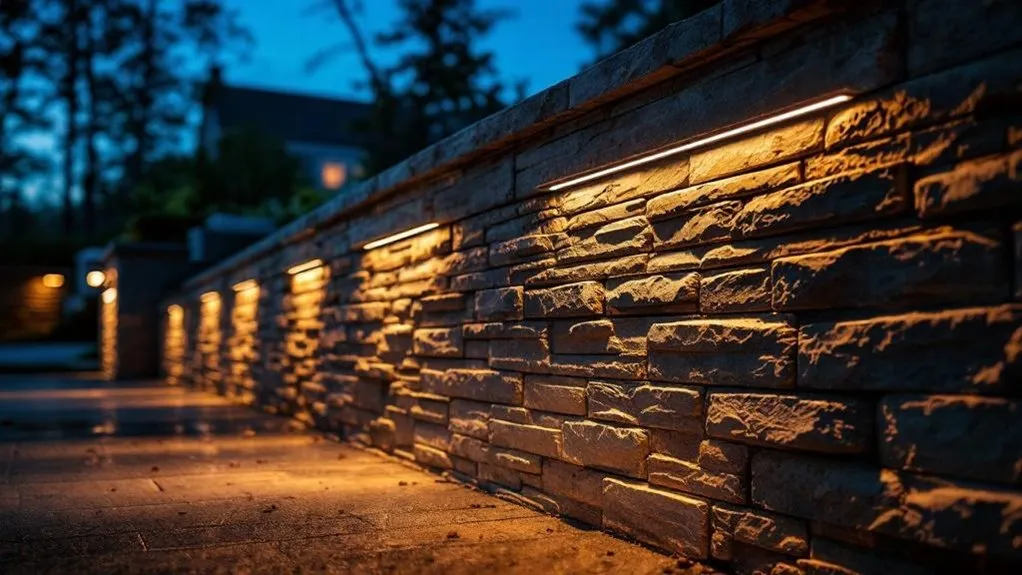
Why settle for harsh spotlights when LED strip lighting can transform your retaining wall into a seamless canvas of illumination?
You’ll create stunning visual continuity by installing flexible LED strips along the horizontal lines of your wall or behind coping stones. These energy-efficient lights offer customizable colors and dimming options, letting you adjust the ambiance for any occasion.
Mount strips in aluminum channels for clean installation and weather protection. You can highlight your wall’s texture and materials while providing subtle security lighting.
The low-profile design keeps fixtures hidden, ensuring your wall’s architecture remains the star while bathing it in beautiful, even light.
Uplighting Techniques to Create Drama and Depth
When you position lights at ground level to cast beams upward against your retaining wall, you’ll create striking shadows and dimensional effects that flat lighting can’t achieve.
Uplighting transforms ordinary walls into dramatic focal points by emphasizing texture and creating depth. You’ll want to angle your fixtures at 30-45 degrees for ideal shadow play.
Transform your space with these powerful uplighting approaches:
- Grazing technique – Place lights close to the wall surface to highlight every stone or brick detail.
- Washing method – Position fixtures farther away for smooth, even illumination.
- Accent spotlights – Create focal points on architectural features.
- Color temperature mixing – Combine warm and cool tones for visual interest.
Built-in Step and Cap Lighting for Safety and Style
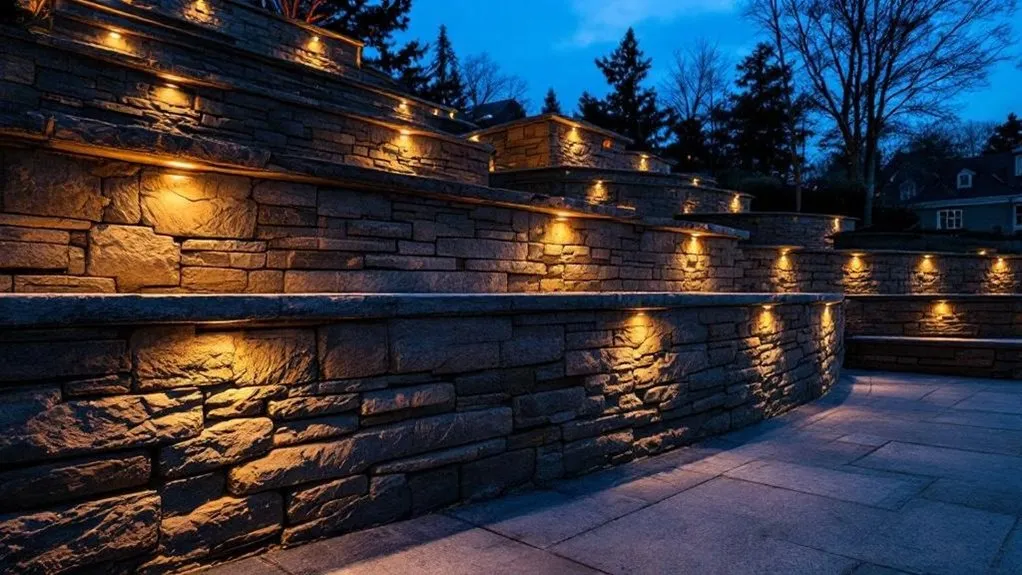
Built-in step and cap lighting takes your retaining wall illumination beyond dramatic effects to address practical safety concerns while maintaining sophisticated style.
You’ll eliminate trip hazards by installing LED strips directly into step risers or treads, creating clear visual pathways for nighttime navigation.
Cap lighting involves embedding fixtures along the top edge of the wall, providing ambient illumination that defines boundaries while adding architectural interest.
Select low-voltage LED options for enhanced energy efficiency and longer lifespan.
Recessed fixtures maintain clean lines, while strip lights offer continuous coverage.
This integrated approach guarantees that your retaining wall functions beautifully after dark.
Accent Lighting to Showcase Wall Materials and Textures
Strategic accent lighting transforms the materials of your retaining wall into stunning focal points, emphasizing the unique textures and patterns that make each installation distinctive.
You’ll create dramatic shadows and highlights that reveal the character of every stone, the weathered charm of every brick, or the modern appeal of every concrete surface.
Essential accent lighting techniques:
- Grazing lights positioned close to the wall surface to create dramatic texture shadows
- Uplighting from ground level to emphasize vertical lines and material depth
- Color-changing LED strips to highlight specific sections during special occasions
- Directional spotlights angled to showcase the most attractive wall sections and architectural details
Solar-Powered Options for Eco-Friendly Illumination
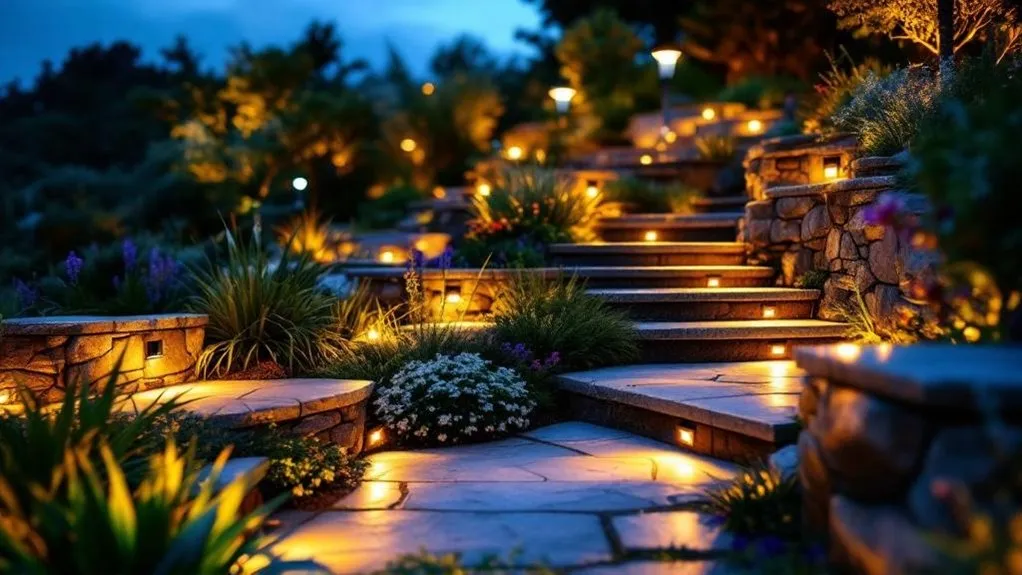
Solar-powered retaining wall lights provide an environmentally conscious solution that eliminates the need for electrical wiring, reducing your energy costs to zero. You’ll find various styles from cap lights that sit atop walls to embedded strip lighting that integrates seamlessly into stone or concrete surfaces.
| Solar Light Type | Best Application |
|---|---|
| Cap Lights | Pillar tops and wall ends |
| Strip Lights | Continuous wall illumination |
| Stake Lights | Base lighting along the wall |
| Step Lights | Terraced retaining walls |
These fixtures automatically charge during daylight hours and provide 6-8 hours of illumination. You’ll appreciate their wireless installation and weather-resistant durability.
Downlighting From Above to Wash Wall Surfaces
When you mount fixtures above your retaining wall, downlighting creates a dramatic washing effect that highlights the wall’s texture and materials.
This technique transforms ordinary stonework or concrete into stunning architectural features that captivate visitors and neighbors alike.
Strategically placed downlights accentuate your wall’s natural beauty while providing essential safety illumination for walkways and stairs.
- Dramatic shadows dancing across textured surfaces create mesmerizing visual depth
- Warm amber glow transforms cold concrete into inviting architectural art
- Enhanced curb appeal makes your property the neighborhood’s crown jewel
- Safe navigation guarantees confident evening strolls along your beautifully illuminated pathways
Color-Changing Smart Lights for Versatile Ambiance
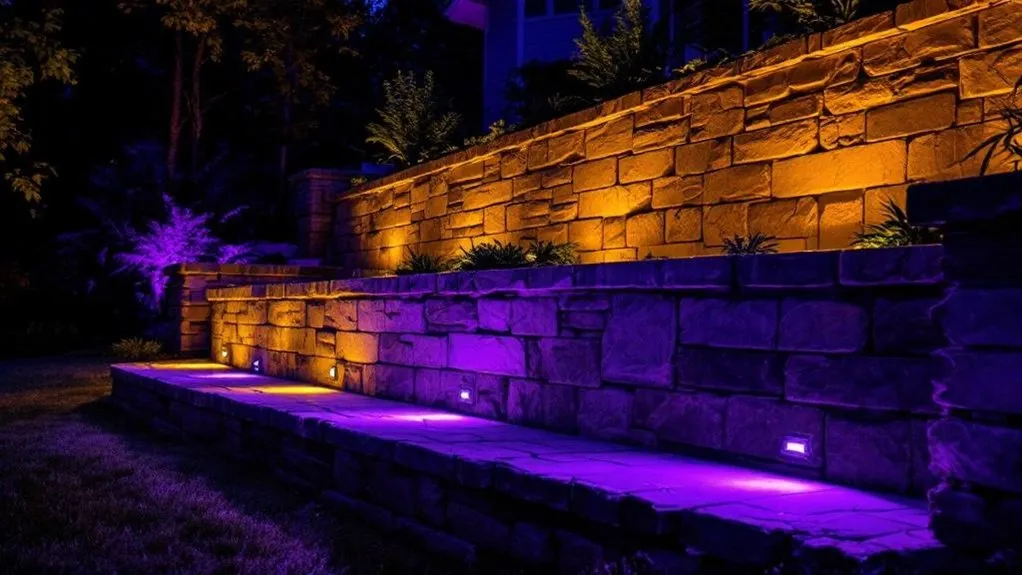
Color-changing bright lights revolutionize your retaining wall’s appearance by adapting to any mood, season, or special occasion with simple voice commands or smartphone taps.
You’ll transform your outdoor space from warm amber for intimate dinners to vibrant blues for pool parties. Install LED strip lights behind stone gaps or mount spotlights at strategic angles.
Program gradual color changes throughout the evening hours or sync lighting with music for an entertaining effect. Innovative systems let you create custom scenes—soft purples for relaxation, energetic reds for celebrations.
Weather-resistant fixtures guarantee year-round performance while app controls provide effortless customization from anywhere.
Low-Voltage vs. Line Voltage Lighting Systems
Although both systems effectively illuminate your retaining wall, low-voltage and line voltage lighting differ notably in terms of installation complexity, safety, and long-term costs.
Low-voltage systems operate at 12 volts, requiring transformers but offering safer DIY installation. Line voltage runs at 120 volts, demanding professional electrician services and permits.
Consider these emotional factors when choosing:
- Peace of mind – Low-voltage systems reduce shock risk around children and pets
- Wallet relief – Lower energy consumption cuts monthly electricity bills considerably
- Installation confidence – You can tackle low-voltage projects yourself without fear
- Future flexibility – Easy relocation and expansion with low-voltage connections
Frequently Asked Questions
How Much Does Professional Installation of Retaining Wall Lighting Typically Cost?
You’ll typically pay between $200 and $ 800 per light fixture for professional installation, depending on your wall’s complexity and local labor rates.
If you’re installing multiple lights, expect total costs ranging from $1,500 to $ 5,000 for most residential projects.
You’ll face higher expenses if your wall requires extensive electrical work or trenching.
Don’t forget that you’ll also need permits in many areas, which can add $100-$ 300 to your overall installation costs.
What Permits Are Required for Installing Electrical Lighting on Retaining Walls?
You’ll typically need an electrical permit from your local building department for hardwired retaining wall lighting.
Most municipalities require permits when you’re adding new electrical circuits or connecting to your home’s main panel.
However, you won’t need permits for low-voltage LED systems or solar lights.
Check with your city’s permit office first, as requirements vary considerably by location and installation complexity.
How Do I Waterproof Electrical Connections for Outdoor Retaining Wall Lighting?
You’ll need weatherproof electrical boxes rated IP65 or higher for outdoor connections.
Use marine-grade wire nuts and apply dielectric grease to all connections before sealing.
Install GFCI outlets and guarantee all junction boxes have proper gaskets.
Wrap connections with self-amalgamating tape, then cover with electrical tape.
Route cables through conduit and seal entry points with waterproof caulk.
Don’t forget to test all connections before backfilling or covering permanently.
What’s the Best Way to Hide Wiring and Cables for Wall Lighting?
You’ll want to run cables through conduit buried behind the wall or within hollow blocks during construction.
For existing walls, you can route wiring through drilled channels and cover them with matching stone veneer or stucco.
Consider using low-voltage systems since they’re easier to hide and safer.
Run cables along the base of the wall, where landscaping naturally conceals them, or thread them through weep holes if available.
How Often Should Retaining Wall Lights Be Cleaned and Maintained?
You should clean your retaining wall lights monthly to remove dirt, debris, and spider webs that dim their brightness.
Inspect fixtures quarterly for loose connections, cracked lenses, or corroded components.
Replace LED bulbs every 3-5 years, even if they’re still working, to maintain peak light output.
During seasonal weather changes, check that seals remain watertight and drainage holes aren’t blocked.
Regular maintenance prevents costly repairs and guarantees your lighting system performs reliably year-round.